Embracing the Art of Intentional Imperfection
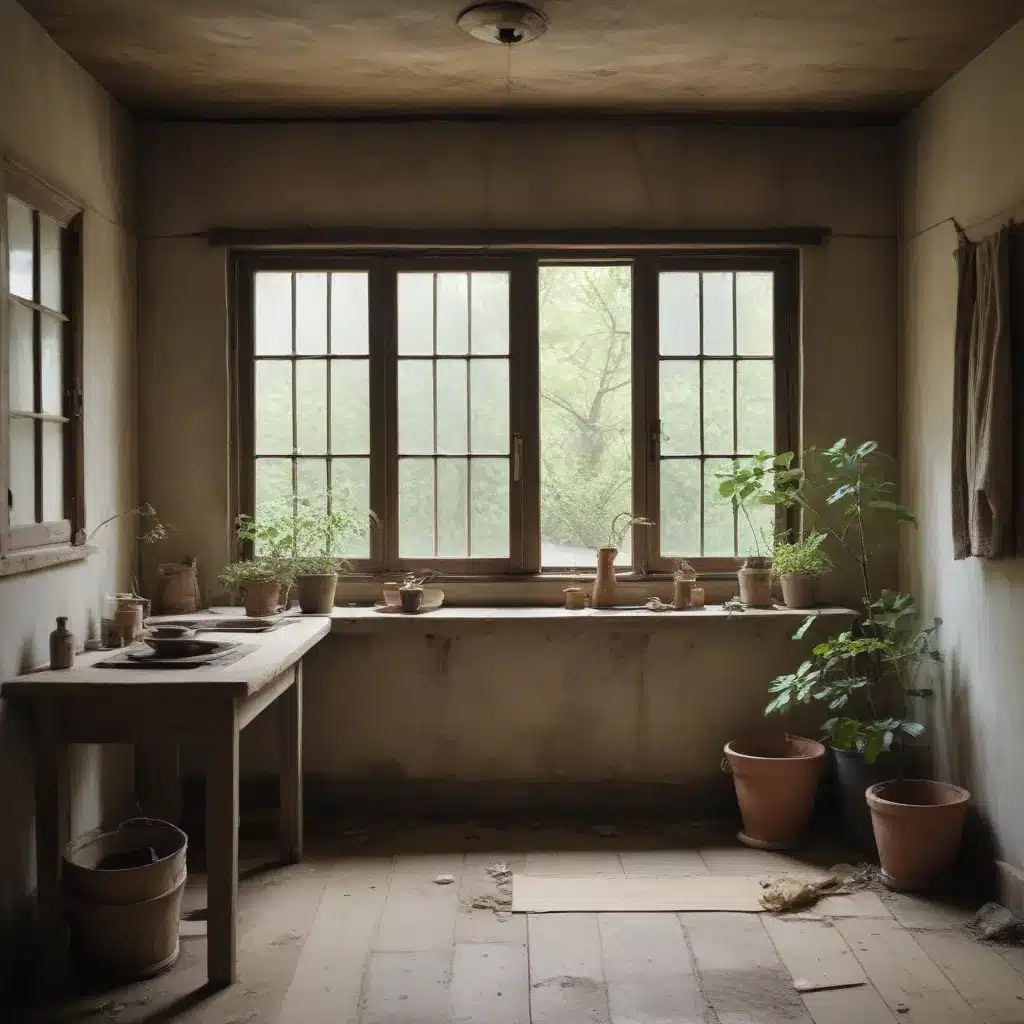
As I step into my humble abode in Nottingham, UK, I can’t help but feel a sense of tranquility wash over me. The air is laced with the aroma of freshly brewed tea, and the soft glow of natural light filters through the windows, casting a warm embrace over the space. Yet, it’s not the pristine, magazine-worthy aesthetic that captivates me – it’s the subtle, almost imperceptible imperfections that make this place truly special.
You see, I’ve embraced the philosophy of Wabi Sabi, a Japanese aesthetic that celebrates the beauty in the imperfect, the incomplete, and the impermanent. It’s a mindset that has transformed the way I approach not just my home, but my entire approach to life. And trust me, it’s been a journey, one that has taught me to find joy in the unexpected, to appreciate the fleeting, and to embrace the natural cycles of growth and decay.
Redefining Cleanliness: A Wabi Sabi Perspective
In a world that often equates cleanliness with perfection, the Wabi Sabi approach offers a refreshing alternative. Rather than striving for a spotless, meticulously curated environment, I’ve learned to appreciate the beauty in the weathered, the worn, and the well-loved. The slight chip in my favorite mug, the gentle patina on my wooden table, the delicate spiderwebs woven in the corner – these are not flaws to be erased, but rather, subtle reminders of the passage of time and the inherent impermanence of all things.
As I navigate my daily cleaning routine, I find myself slowing down, taking a moment to truly observe the spaces around me. I no longer frantically scrub every surface, desperate to achieve a state of clinical sterility. Instead, I embrace the natural ebb and flow of dust, the occasional stray leaf, and the gentle accumulation of life’s natural textures. It’s a delicate dance, finding the balance between maintaining a sense of order and allowing the natural world to gently reclaim its territory.
Cultivating a Mindful Approach to Homekeeping
At the heart of Wabi Sabi homekeeping is a deep sense of mindfulness. It’s about being present in the moment, attuned to the subtle rhythms and patterns that unfold within our living spaces. Instead of mindlessly rushing through chores, I’ve learned to approach each task with a sense of reverence and attention.
When I dust the shelves, I don’t simply wipe away the accumulated particles, but I take a moment to appreciate the way the light plays across the surface, highlighting the unique contours and textures. When I tidy up the living room, I consciously arrange the cushions and throws, not to achieve a flawless, magazine-worthy look, but to create a sense of balance and harmony that resonates with my soul.
Even the act of washing the dishes has become a meditative practice. As I gently scrub each plate, I’m mindful of the water’s temperature, the suds’ gentle caress, and the rhythmic motions of my hands. It’s a humble, yet profound, way of engaging with the world around me, finding beauty in the most mundane of tasks.
Finding Joy in the Imperfect
One of the most transformative aspects of Wabi Sabi homekeeping is the way it has shifted my perspective on perfection. Rather than striving for an unattainable ideal, I’ve learned to embrace the inherent imperfections that make my home and my life truly unique.
Take, for instance, the small stain on my living room rug. In a traditional cleaning mindset, I might have frantically scrubbed and scrubbed, desperate to erase this “blemish.” But through the lens of Wabi Sabi, I see the stain as a testament to the rich tapestry of life – a reminder that our spaces are not sterile, lifeless voids, but rather, dynamic canvases upon which we paint the stories of our existence.
Similarly, I’ve come to cherish the mismatched mugs in my kitchen, each one bearing its own unique character and history. They’re not a set of pristine, matching pieces, but rather, a collection of well-loved vessels that have been shaped by the hands of time. And when I sip my morning tea from one of these mugs, I’m reminded that perfection is not only unattainable, but it’s also entirely beside the point.
Embracing the Cycle of Impermanence
At the heart of Wabi Sabi is the acknowledgment of impermanence – the understanding that all things are in a constant state of flux, ebbing and flowing like the tides. And as I’ve embraced this principle in my homekeeping, I’ve found a newfound sense of peace and acceptance.
Gone are the days when I’d stress over the ever-changing patterns of dust and debris that accumulate in my home. Instead, I see them as a natural part of the cycle of life, a testament to the restless energy that pulses through our living spaces. When I notice a cobweb in the corner, I don’t rush to sweep it away, but rather, I take a moment to marvel at the delicate artistry of the spider’s creation, knowing that it too, will eventually succumb to the passage of time.
Even the aging of my beloved furnishings has become a source of comfort, rather than a source of anxiety. I see the gradual fading of the upholstery, the gentle rounding of the edges, not as signs of decay, but as evidence of the rich tapestry of experiences that have unfolded within these spaces. Each scratch, each dent, each weathered surface is a chapter in the ongoing story of my home, and I find solace in the knowledge that nothing lasts forever.
Embracing the Wabi Sabi Lifestyle: A Journey of Transformation
As I reflect on my journey into the world of Wabi Sabi homekeeping, I’m struck by the profound impact it has had on my life. It’s not just about how I clean and organize my living space, but rather, a deep-rooted shift in my entire worldview.
Gone are the days when I’d be consumed by the relentless pursuit of perfection, always striving to achieve an unattainable ideal. Instead, I’ve learned to find joy in the imperfect, the incomplete, and the impermanent. I no longer see my home as a stage to be perfectly curated, but rather, as a living, breathing canvas upon which the story of my life unfolds.
And as I’ve embraced this Wabi Sabi mindset, I’ve found that it has seeped into every aspect of my life. I’m more attuned to the subtle rhythms of nature, the fleeting beauty of a sunset, the gentle dance of the seasons. I’ve learned to let go of the need to control every aspect of my environment, and instead, I’ve found a deep sense of contentment in surrendering to the natural ebb and flow of the world around me.
Sharing the Wabi Sabi Journey with Others
As I’ve navigated this Wabi Sabi path, I’ve often found myself wanting to share this transformative experience with others. It’s a philosophy that has brought me so much peace and joy, and I believe that it has the power to enrich the lives of those around me as well.
That’s why I’m passionate about sharing my Wabi Sabi homekeeping journey with my community here in Nottingham. Whether it’s hosting a cozy tea gathering to discuss the principles of this Japanese aesthetic, or leading a workshop on mindful cleaning practices, I’m eager to connect with others who are intrigued by the idea of finding beauty in the imperfect.
And who knows, maybe my own journey into Wabi Sabi will inspire someone else to embark on a similar path of self-discovery and transformation. After all, the beauty of this philosophy lies in its universality – it’s a way of living that can be embraced by anyone, regardless of their background or circumstances.
So, if you’re feeling overwhelmed by the relentless pursuit of perfection, or if you’re simply curious about exploring a more mindful approach to homekeeping, I invite you to join me on this Wabi Sabi adventure. Together, let’s uncover the hidden gems that lie within the imperfect, the incomplete, and the impermanent, and let them fill our hearts and our homes with a profound sense of peace and wonder.