
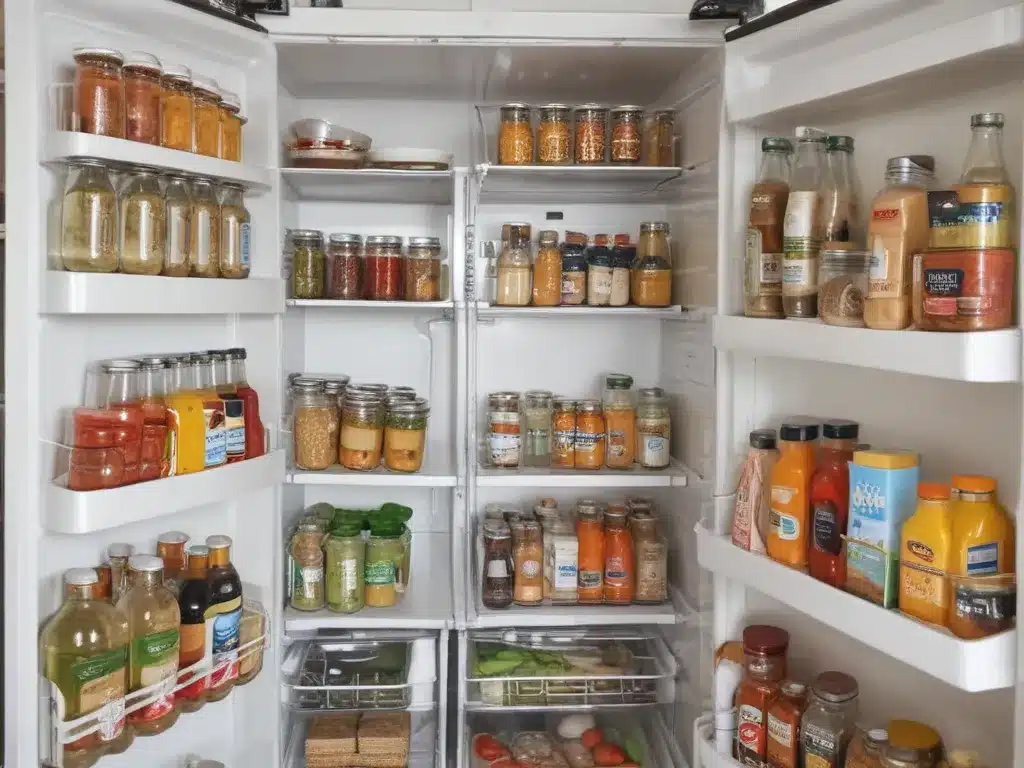
Decluttering Your Fridge: A Step-by-Step Guide
I understand the struggle of maintaining a well-organized fridge. It can be a daunting task, but with the right approach, you can transform your refrigerator into a haven of efficiency and order. Let’s dive into the steps that will help you achieve a fridge you can be proud of.
Assess the Current State of Your Fridge
The first step in organizing your fridge is to take a good look at its current condition. What items have been sitting in the back, forgotten and past their prime? Which shelves are overflowing, while others seem barren? By taking the time to assess the state of your fridge, you’ll gain valuable insights that will guide the rest of the process.
Once I’ve identified the problem areas, I can start to formulate a plan of action. Which items need to be discarded, and which can be reorganized to make better use of the available space? This evaluation will be the foundation for the rest of the organization process.
Categorize and Containerize
With a clear understanding of the current state of your fridge, it’s time to start categorizing and containerizing your items. I like to group similar items together, such as condiments, dairy products, and fresh produce. This not only makes it easier to find what you need but also helps to maximize the available space.
To take it a step further, I recommend using a variety of containers and organizers to keep everything in its place. Stackable bins, clear storage containers, and lazy susans can all be incredibly useful in creating a well-organized fridge. By containerizing your items, you’ll be able to see what you have at a glance, reducing the risk of forgotten or expired food.
Purge and Discard
One of the most important steps in organizing your fridge is to purge and discard any items that are past their prime or no longer needed. It’s easy for the fridge to become a repository for expired sauces, half-used jars, and forgotten leftovers. By taking the time to go through each shelf and drawer, you can eliminate clutter and create more space for the items you actually use.
As I go through the purging process, I’m mindful of the expiration dates on my items and any signs of spoilage. I also take the opportunity to wipe down the shelves and drawers, ensuring that my fridge is clean and ready for the next step.
Optimize Shelf Placement
Now that I’ve decluttered and categorized my fridge contents, it’s time to optimize the shelf placement. I like to arrange my items in a way that makes the most sense for my household. For example, I might keep the most frequently used items at eye level, with less-used items on the top and bottom shelves.
Additionally, I consider the temperature zones within my fridge. Colder areas, such as the back and bottom shelves, are ideal for storing meats, dairy, and other perishable items. Warmer zones, like the door shelves, are better suited for condiments, beverages, and items that don’t require the coldest temperatures.
By strategically placing my items, I can ensure that everything is easily accessible and stored in the optimal conditions for maximum freshness.
Maintain and Upkeep
Organizing your fridge is an ongoing process, and it’s important to establish a routine for maintaining it. I like to set aside time each week to do a quick check-in, discarding any expired items and ensuring that everything is in its proper place.
Additionally, I find it helpful to create a system for tracking expiration dates and rotating items. This could involve labeling containers with the date of purchase or using a first-in, first-out approach. By staying on top of the upkeep, I can keep my fridge in tip-top shape and avoid the hassle of dealing with spoiled or forgotten food.
Conquering the Pantry: A Systematic Approach
Just as the fridge requires attention, the pantry can also benefit from a thorough organizational overhaul. The pantry is often the catchall for a wide range of dry goods, canned items, and cooking essentials, making it easy for clutter to accumulate.
Evaluate and Eliminate
The first step in organizing your pantry is to take a comprehensive inventory of its contents. I like to pull everything out, sorting and categorizing as I go. This not only helps me identify items that need to be discarded but also provides a clear picture of what I have and what I might be missing.
As I sift through the items, I’m mindful of expiration dates, damaged packaging, and any items that have been sitting untouched for far too long. By ruthlessly eliminating the unnecessary, I can create more space and clarity in my pantry.
Containerize and Label
Once I’ve purged my pantry of unwanted items, it’s time to start containerizing and labeling the remaining items. I find that using a variety of airtight containers, bins, and jars not only helps to preserve the freshness of my dry goods but also creates a visually appealing and organized space.
I also make it a point to label each container with the contents and the date of storage. This helps me keep track of my inventory and ensures that I’m using items in the order they were purchased, reducing waste.
Optimize Shelf Placement
Just as with the fridge, the placement of items in the pantry is crucial for efficiency and accessibility. I like to group similar items together, such as baking supplies, canned goods, and snacks. This makes it easier to find what I need and ensures that I’m not constantly shuffling items around.
I also consider the frequency of use when arranging my pantry. The items I reach for most often are placed at eye level, while less-used items are stored on the top and bottom shelves. This simple adjustment can save me time and energy during meal prep and cooking.
Incorporate Helpful Storage Solutions
In addition to containers and labels, there are a variety of storage solutions that can further enhance the organization of my pantry. Lazy susans, tiered shelves, and door-mounted racks can all be incredibly useful in maximizing the available space and keeping everything within easy reach.
I also find that investing in a few baskets or bins can help to corral smaller items and keep them from getting lost in the shuffle. By incorporating these clever storage solutions, I can create a pantry that is not only organized but also aesthetically pleasing.
Maintain and Rotate
Just as with the fridge, maintaining the organization of my pantry is an ongoing process. I make it a point to do a quick check-in each time I add new items, ensuring that everything is in its proper place and that expiration dates are up-to-date.
Additionally, I establish a rotation system for my dry goods and canned items, ensuring that I’m using the oldest items first. This not only helps to reduce waste but also keeps my pantry stocked with fresh, usable ingredients.
The Benefits of an Organized Fridge and Pantry
By taking the time to organize your fridge and pantry, you can unlock a wealth of benefits that will positively impact your daily life. Let’s explore some of the key advantages of having a well-organized food storage space.
Reduced Waste and Increased Savings
One of the most significant benefits of an organized fridge and pantry is the reduction of food waste. When you can easily see what you have on hand and track expiration dates, you’re less likely to forget about items and let them spoil. This not only saves you money but also reduces the environmental impact of wasted food.
Furthermore, with a clear understanding of your inventory, you can plan your meals more effectively and make more informed purchasing decisions. This can lead to significant savings on your grocery bills, as you’ll be less likely to overbuy or make impulse purchases.
Streamlined Meal Preparation
An organized fridge and pantry can also make meal preparation a breeze. When everything is in its proper place, you can quickly locate the ingredients you need and get to cooking without the frustration of searching through cluttered shelves.
This efficiency translates to quicker meal prep, less time spent in the kitchen, and more opportunities to enjoy your meals with family and friends. It’s a win-win for both your time management and your culinary endeavors.
Improved Health and Wellbeing
A well-organized food storage space can also have a positive impact on your health and overall well-being. By keeping your fridge and pantry stocked with fresh, readily available ingredients, you’re more likely to make healthier choices and stick to a balanced diet.
Moreover, the sense of order and control that comes with an organized fridge and pantry can contribute to a more calming and stress-free home environment. When you can easily find what you need and take pride in the cleanliness and efficiency of your food storage, it can have a ripple effect on your mental and emotional well-being.
Conclusion: Unlock the Power of an Organized Fridge and Pantry
Organizing your fridge and pantry is a transformative process that can bring a wealth of benefits to your daily life. By following the steps outlined in this guide, you can declutter, categorize, and optimize your food storage spaces, creating a haven of efficiency and order.
Remember, the key to maintaining an organized fridge and pantry is to stay consistent and make it a part of your routine. Set aside regular time to check in, purge, and maintain your spaces, and you’ll be well on your way to a more streamlined and satisfying cooking and eating experience.
If you’re in need of professional cleaning services to help get your fridge and pantry in tip-top shape, I encourage you to explore the offerings at AdamCleaning.uk/services/. Their team of experts can assist with deep cleaning, organization, and even the implementation of customized storage solutions to suit your unique needs.
Embrace the power of an organized fridge and pantry and unlock the many advantages it can bring to your life. Start your journey to a more efficient, waste-reducing, and stress-free food storage experience today.