Over time, walls and doors can accumulate grime that can be difficult to remove. With the right cleaning techniques and products, removing grime can be a manageable task. This article will provide an in-depth guide to effectively clean grimy walls and doors.
Understanding Grime Buildup on Walls and Doors
Grime refers to the buildup of dirt, grease, and other residue on surfaces over time. On walls and doors, grime often consists of:
- Dust – Airborne particles like pet dander, pollen, and smoke settle on walls and doors.
- Grease – Cooking fumes and handprints leave behind oily residue.
- Mold/mildew – Excess moisture causes mold and mildew growth.
- ** tracked-in dirt** from shoes and clothing.
Grime tends to accumulate more in high-traffic areas around light switches, door knobs, and along the lower portion of walls. Kitchens and bathrooms are also grime hotspots.
Over time, layers upon layers of grime build up and stick stubbornly to walls and doors. Removing these stubborn deposits requires using the right cleaning techniques.
Cleaning Supplies for Removing Grime
Having the proper cleaning tools and products make grime removal much easier. Here are the must-have supplies:
- Vacuum cleaner – Removes loose dust and dirt.
- Microfiber cloths – Lift and trap grime effectively.
- Sponges – For scrubbing grimy areas.
- All-purpose cleaner – Cuts through grease and grime.
- Baking soda – Gentle abrasive that cleans and deodorizes.
- White vinegar – Cuts grease, removes mold/mildew.
- Magic eraser – Excellent for scuff marks.
- Toothbrush – For scrubbing in crevices and edges.
Avoid abrasive cleaners and scrubs which can damage surfaces.
Techniques for Cleaning Grimy Walls
Proper techniques make cleaning walls much simpler:
1. Vacuum walls – Use brush attachment to remove surface dust and debris.
2. Spot clean grime – Spray all-purpose cleaner and wipe grimy spots with a microfiber cloth.
3. Clean from top to bottom – Systematically wipe down the wall in sections starting at the top.
4. Rinse cleaning solution – Wipe the wall with a clean damp microfiber cloth to rinse off cleaning product.
5. Stubborn grime – For tough deposits, make a baking soda paste. Let it sit briefly before scrubbing and rinsing. Vinegar also helps cut through stubborn grease.
6. Mold/mildew – Scrub affected areas with vinegar and rinse. Allow walls time to fully dry to prevent recurrence.
7. Magic eraser – Gently rub scuff marks and pencil streaks until they lift off.
8. Toothbrush scrub – Use for cleaning crevices around switches and edges.
With some elbow grease and proper technique, walls can be restored to a clean, grime-free state.
Effective Techniques for Cleaning Grimy Doors
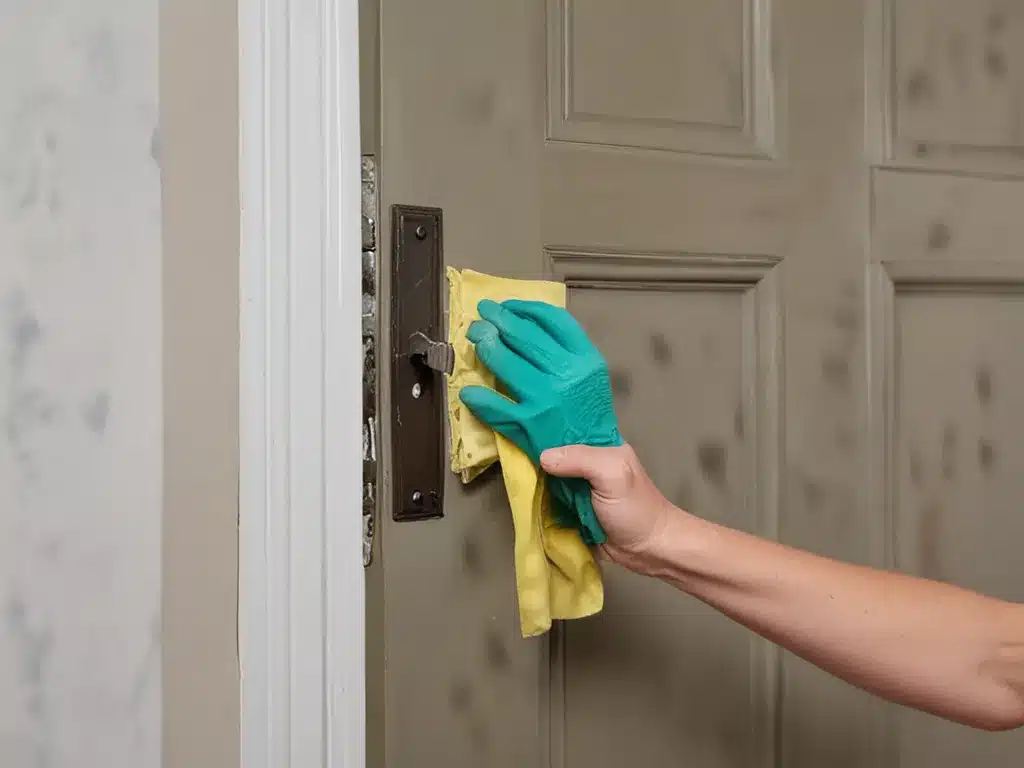
Doors suffer grime buildup from repeated opening/closing and hand contact. Here are tips for tackling filthy doors:
-
Vacuum loose debris with a brush attachment.
-
Wipe down the door from top to bottom with an all-purpose cleaner and microfiber cloth.
-
Scrub door handles thoroughly with a disinfecting cleaner and toothbrush. Get into crevices.
-
Spray vinegar on moldy areas of the door, let sit briefly, then scrub and rinse.
-
Clean glass doors by spraying glass cleaner onto a microfiber cloth then wipe down glass. Avoid spraying cleaner directly on glass.
-
For scuff marks on doors, gently rub with a magic eraser until removed.
-
Use a toothbrush to thoroughly clean the door edges and corners.
-
After cleaning, rinse doors with a clean, damp microfiber cloth to remove cleaning product residue.
With concerted effort, maintain doors in a pristine, grime-free condition.
Preventing Grime Buildup
Prevention is key to keeping walls and doors free of recurring grime:
-
Use door mats and vacuum frequently to reduce tracked-in dirt.
-
Keep kitchen and bath exhaust fans running to decrease moisture buildup.
-
Clean any mold/mildew quickly before it spreads.
-
Use microfiber cloths for dusting walls weekly to prevent grime accumulation.
-
Consider repainting walls in kitchens, baths and high-traffic areas to cover grime-prone surfaces.
-
Install glass doors or mirrors which resist grime buildup better than painted doors.
With vigilance and using these grime prevention tips, walls and doors will stay cleaner longer.
Conclusion
Although grimy walls and doors are common problems, they can be effectively cleaned and maintained grime-free. By using the right techniques and cleaning products, removing embedded dirt and grease becomes manageable. Combine thorough, frequent cleaning with grime prevention measures for the cleanest walls and doors. With this guide’s step-by-step process, tackling grimy walls and doors is no longer a dreaded chore.