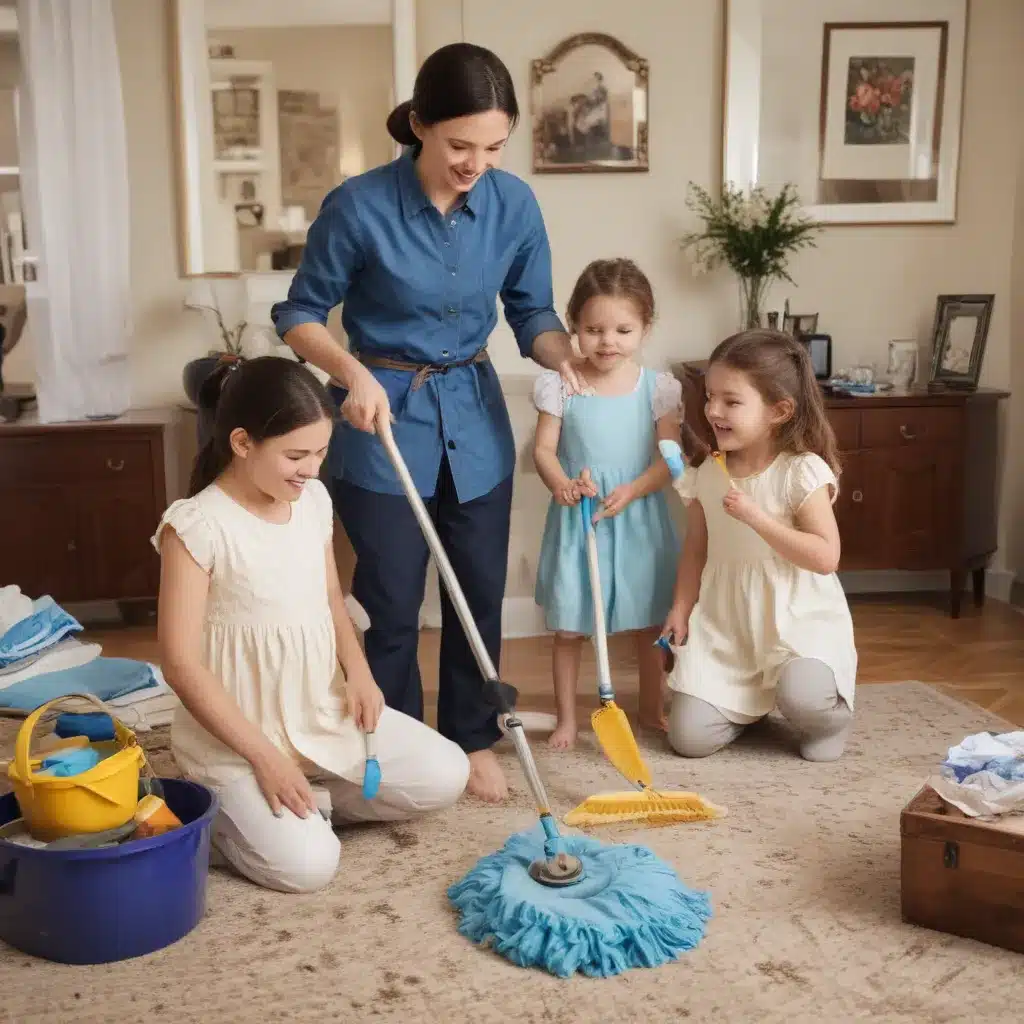
The Sacred Rituals of Keeping a Spotless Home
As a proud Nottingham local, I’ve always been fascinated by the rich cultural tapestry that defines our community. One aspect that has long intrigued me is the deep reverence many families here hold for the art of cleaning and maintaining a tidy, welcoming home. It’s a practice that goes far beyond mere practicality – it’s a cherished tradition, imbued with meaning and significance.
Allow me to take you on a journey through some of the captivating cultural cleaning customs that I’ve had the privilege of learning about over the years. Prepare to be inspired, amused, and perhaps even a little enlightened, as we explore the ways in which cleaning can be elevated to a sacred ritual.
Cleansing the Spirit Through Clean Spaces
One of the first things I noticed when delving into the cleaning customs of Nottingham households is the deep spiritual component that often underlies the practice. For many families, maintaining a spotless, orderly home is not just about aesthetics or practicality – it’s a way of honoring the sanctity of one’s living space and cleansing the spirit.
Take the Patel family, for instance. Every Saturday morning, the entire household gathers to embark on a thorough, ritualistic cleaning of their home. It begins with the lighting of incense and the recitation of a ancient mantras, as they collectively “purge” the space of any negative energy or stagnant vibrations. The children are taught from a young age to approach this task with reverence and focus, understanding that a clean home is a reflection of a clear, centered mind.
As Mrs. Patel explained to me, “Our home is not just a physical structure – it’s a sanctuary, a sacred space that nourishes our souls. By keeping it immaculately clean, we are honoring that sanctity and inviting positive energy to bless our family.”
This belief in the spiritual power of cleanliness is echoed in many other Nottingham homes. The Gunasekaras, for example, have a tradition of thoroughly scrubbing and smudging their entire house before major Hindu festivals, believing that this ritual cleansing prepares the way for auspicious divine blessings. And the Williamses, a devout Christian family, start each morning with a prayer and a thorough tidying of their living space, seeing it as a way to “clear the path” for God’s light to enter.
Fascinating, isn’t it? The idea that the simple act of cleaning can be imbued with such deep, transcendent meaning. It’s a perspective that has certainly broadened my own understanding of the power of a spotless home.
Honoring Ancestors Through Cleaning Rituals
But the cultural significance of cleaning customs in Nottingham extends beyond the spiritual realm – it’s also deeply rooted in the concept of honoring one’s ancestors and family lineage. Many households here engage in cleaning rituals that are passed down through generations, each act imbued with reverence for those who came before.
Take, for example, the Lees, a family with deep Chinese heritage. Every Lunar New Year, the entire clan gathers to partake in a thorough “spring cleaning” of the family home. This isn’t just about decluttering and freshening up – it’s a way of honoring their ancestors and clearing the way for new beginnings. As the matriarch, Mrs. Lee, explained to me, “We believe that by meticulously cleaning every nook and cranny, we are paying tribute to the hard work and sacrifices of our forebears. It’s our way of showing respect and gratitude for the foundation they laid for our family.”
The rituals involved are fascinatingly intricate. First, the family spends days carefully packing away any items that hold sentimental value, ensuring they are properly cared for. Then, they embark on a deep clean of the entire house, from top to bottom, using traditional herbal-infused cleaning solutions passed down through the generations. As they scrub and polish, they whisper words of appreciation to their ancestors, asking for their blessings on the new year ahead.
But the Lees are not alone in this reverence for familial lineage through cleaning. The Okoyes, a Nigerian family, have a similar tradition of thoroughly cleaning their home before any major family gathering or celebration. As the eldest daughter, Amara, shared with me, “It’s our way of welcoming our ancestors and making sure the space is worthy of their presence. We believe that when our home is spotless, it honors the hard work and sacrifices of those who came before us.”
Witnessing these intricate, deeply meaningful cleaning rituals has been a true privilege. It’s a powerful reminder that the simple act of maintaining a tidy home can be imbued with profound cultural significance, serving as a bridge between the past, present, and future.
The Healing Power of Cleaning
But the cultural significance of cleaning customs in Nottingham extends beyond the spiritual and ancestral realms – it also plays a vital role in the healing and well-being of individuals and families. For many households, the act of cleaning is seen as a therapeutic, restorative practice that can help restore balance and harmony.
Take the case of the Williamson family, who have weathered their fair share of challenges over the years. When Mrs. Williamson was diagnosed with a chronic illness, the entire household rallied together to implement a daily cleaning routine that brought a sense of structure and control back into their lives. “It was during those darkest moments that cleaning became our anchor,” she shared with me. “The methodical, calming nature of wiping, scrubbing, and organizing helped us all feel more grounded and centered. It was as if we were cleansing not just our home, but our minds and spirits as well.”
The Williamsons are not alone in this experience. Many Nottingham residents I’ve spoken to have echoed the sentiment that cleaning can be a powerful tool for mental and emotional healing. The Patels, for instance, find solace in their Saturday morning cleaning rituals, using the time to process their thoughts, release stress, and reconnect as a family. And the Okoyes have a tradition of thoroughly cleaning the home after any major life event or transition, whether it’s the birth of a new baby or the passing of a loved one.
“There’s something so grounding and restorative about putting your hands to work, about transforming a cluttered, chaotic space into one that is orderly and serene,” mused Mrs. Okoya. “It’s as if you’re physically manifesting the inner work you need to do. Cleaning isn’t just a chore for us – it’s a form of self-care, a way to find balance and healing.”
Listening to these stories has certainly given me a newfound appreciation for the therapeutic power of cleaning. It’s a practice that can transcend the purely physical, tapping into the emotional, mental, and even spiritual realms of the human experience. Who knew that scrubbing floors and dusting shelves could be such a profound act of self-care and restoration?
The Joy of Shared Cleaning
But perhaps one of the most heartwarming aspects of the cultural cleaning customs I’ve encountered in Nottingham is the sense of community and togetherness that often surrounds the practice. Far from being a solitary chore, cleaning can be a joyful, communal experience that brings families and neighborhoods closer together.
Take the case of the Lees, for example. As I mentioned earlier, their Lunar New Year cleaning ritual is a beloved annual tradition that involves the entire extended family. But what struck me most was the sense of camaraderie and playfulness that permeated the process. Rather than viewing it as a tiresome task, the Lees approached it with a spirit of collaboration and celebration.
“It’s not just about getting the job done,” Mrs. Lee told me with a warm smile. “It’s about reconnecting, sharing stories, and creating memories together. The children might be in charge of dusting the shelves, while the elders scrub the floors. And in between, we’ll take breaks to enjoy traditional snacks and play little games. It’s a time for us to bond, to feel a deeper sense of belonging to our clan.”
The Okoyes have a similar approach to their pre-celebration cleaning rituals. As Amara explained, “It’s not just about the end result – it’s about the journey. We’ll put on our favorite music, share jokes, and check in with each other as we work. There’s a real sense of shared purpose and teamwork, and it always leaves us feeling more connected as a family.”
Even in the day-to-day cleaning routines of Nottingham households, I’ve witnessed this spirit of community and collaboration. Neighbors will often pop in to lend a hand or share cleaning tips, and impromptu cleaning “parties” sometimes break out on quiet residential streets. It’s as if the act of maintaining a tidy, welcoming home is a unifying force that brings people together.
In a world that can sometimes feel increasingly isolating and individualistic, these shared cleaning customs serve as a heartwarming reminder of the power of community. They demonstrate that even the most mundane household chores can be elevated into joyful, bonding experiences – if we approach them with the right mindset and a spirit of togetherness.
Conclusion: Embracing the Cultural Richness of Cleaning
As I reflect on the countless cultural cleaning customs I’ve had the privilege of learning about in Nottingham, I’m struck by the sheer depth and diversity of meaning that can be infused into such a seemingly ordinary task. From the sacred, spiritual rituals of the Patels to the ancestral reverence of the Lees, from the therapeutic healing power of the Williamsons to the communal joy of the Okoyes – the ways in which cleaning can be elevated into a profound, culturally significant practice are truly awe-inspiring.
These traditions remind us that the cleanliness of our homes is not just about maintaining appearances or practical concerns. It’s about honoring our histories, nurturing our spirits, and strengthening the bonds of community. It’s a practice that can transcend the purely physical realm, touching the very core of who we are as individuals and as members of a vibrant, multicultural society.
So, the next time you pick up a mop or a duster, I encourage you to pause and reflect on the deeper significance of your actions. What ancestral legacies are you honoring? What spiritual energies are you inviting into your space? How might this simple act of cleaning be a form of self-care, or a catalyst for strengthening your connections with loved ones?
By embracing the cultural richness of cleaning customs, we open ourselves up to a richer, more fulfilling experience of maintaining a tidy, welcoming home. It’s a practice that has the power to nourish our souls, heal our wounds, and bring us closer together as a community.
So, let us celebrate the beauty and meaning that can be found in the simple act of cleaning. For in doing so, we honor not just the physical spaces we inhabit, but the very essence of what it means to be human.