Understanding the Junk Drawer Dilemma
The junk drawer is a universal phenomenon, a catch-all for the miscellaneous items that accumulate in our homes over time. It’s a source of frustration, a black hole that seems to swallow up our possessions, making it challenging to find what we need when we need it. As an expert in home organization and decluttering, I understand the struggle all too well. The junk drawer can feel like a never-ending battle, but with the right approach, you can conquer it once and for all.
Firstly, let’s explore why the junk drawer becomes such a problem in the first place. The subject, our tendency to accumulate stuff, predicates the creation of a catchall space to store it all. This object, the junk drawer, then becomes a symbol of our inability to maintain order and control in our living spaces. It’s a problem that plagues homeowners and renters alike, and it’s one that I’m determined to help you solve.
Identifying the Culprits: What’s Hiding in Your Junk Drawer?
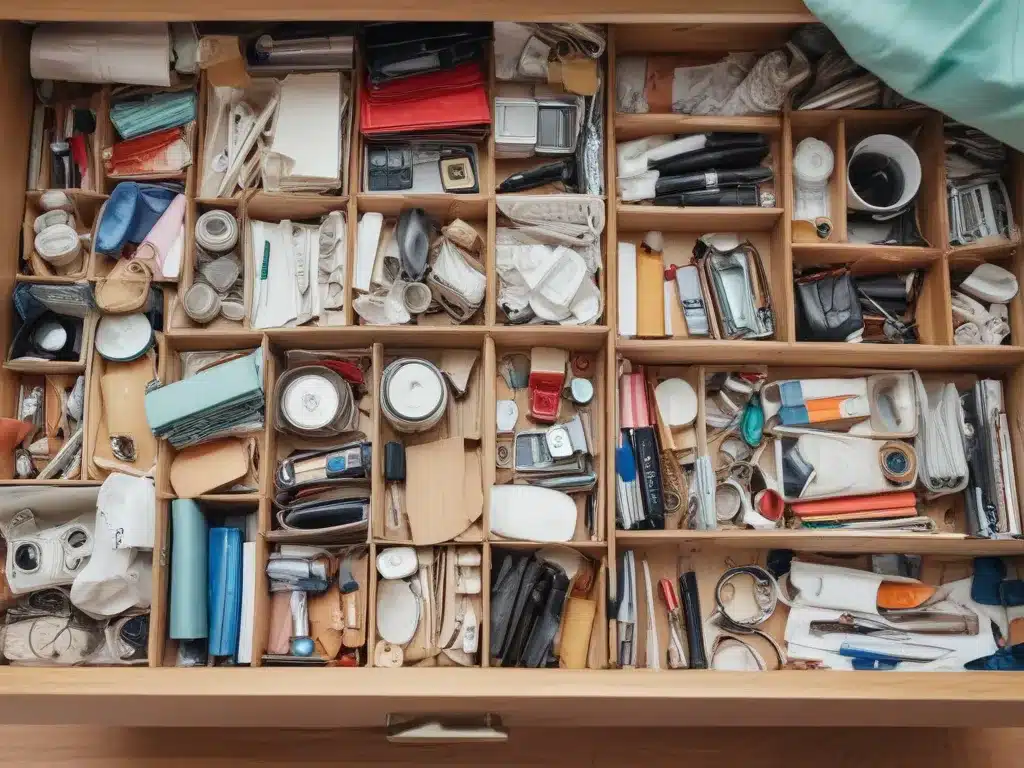
When you open your junk drawer, what do you typically find? The subject, the contents of the drawer, predicate a diverse array of items that have found their way into this cluttered space. From old batteries and random screws to forgotten coupons and mystery cables, the object, the junk drawer, serves as a repository for the odds and ends that we just can’t seem to part with.
One of the keys to conquering the junk drawer is to understand what’s actually living in there. Take some time to empty the drawer completely and sort through the contents. Group similar items together, and make a mental note of the categories that emerge. This exercise will not only help you identify the culprits but also give you a better understanding of what’s truly important and what can be discarded.
The Decluttering Process: Step-by-Step Guidance
Now that you’ve identified the contents of your junk drawer, it’s time to tackle the decluttering process. The subject, the decluttering process, predicates a systematic approach to reclaiming your space and restoring order.
Step 1: Establish a Baseline
The first step in the decluttering process is to establish a baseline. The subject, your current junk drawer situation, predicates the need to assess the current state of affairs. Take a clear, honest look at the drawer and ask yourself: “How did it get to this point?” Understanding the root causes of the clutter will help you develop a more effective plan of action.
Step 2: Categorize and Prioritize
With the contents of the drawer laid out before you, it’s time to start categorizing and prioritizing. The subject, the items in the drawer, predicates the need to group them into logical categories. This could include items like office supplies, household tools, spare change, and so on. Once you’ve created these categories, the subject, the categories, predicates the prioritization of what’s truly important and what can be let go.
Step 3: Purge and Organize
The subject, the purging and organizing process, predicates the elimination of unnecessary items and the efficient arrangement of the remaining ones. Start by discarding anything that’s broken, expired, or no longer needed. Then, consider how you can best organize the remaining items to make them easily accessible and visible. This may involve investing in drawer organizers, containers, or other storage solutions.
Maintaining Order: Preventing the Junk Drawer’s Return
The subject, the junk drawer, predicates the need for ongoing maintenance to prevent its return. Once you’ve decluttered and organized your drawer, the subject, the organized drawer, predicates the implementation of systems and habits to keep it that way.
Create a Junk Drawer Policy
Establish a clear policy for what can and cannot go into the junk drawer. The subject, the policy, predicates the establishment of boundaries and guidelines to prevent the drawer from becoming a catchall once again. Communicate this policy to all members of your household to ensure everyone is on the same page.
Adopt a Mindful Approach
The subject, your approach to the junk drawer, predicates the adoption of a mindful mindset. Instead of mindlessly tossing items into the drawer, take a moment to consider where they belong. The object, proper storage solutions, may include dedicated drawers, shelves, or containers for specific categories of items.
Schedule Regular Maintenance
The subject, the organized junk drawer, predicates the need for regular maintenance to keep it that way. Set aside time, perhaps once a month or every few months, to review the contents of the drawer and make any necessary adjustments. The object, this maintenance routine, will help you stay on top of the clutter and prevent it from spiraling out of control.
Real-Life Junk Drawer Transformations
To provide you with a more tangible understanding of the junk drawer decluttering process, let’s explore some real-life case studies.
The Home Office Junk Drawer
The subject, a client’s home office junk drawer, predicates a chaotic and overwhelming space. The object, the contents of the drawer, included a hodgepodge of office supplies, old receipts, and forgotten electronics. Through a systematic decluttering process, the subject, the client, was able to transform the drawer into a well-organized workspace. The object, the newly organized drawer, now houses only the essential items needed for daily tasks, making it easier to find what’s required.
The Family Junk Drawer
The subject, a family’s junk drawer, predicates a common challenge faced by households with multiple members. The object, the contents of the drawer, included toys, batteries, and a variety of miscellaneous items. By involving the entire family in the decluttering process, the subject, the family, was able to establish clear boundaries and assign designated storage spaces for different categories of items. The object, the reorganized junk drawer, now serves as a functional and orderly space that everyone in the household can maintain.
The Minimalist Junk Drawer
The subject, a minimalist client’s junk drawer, predicates a unique approach to dealing with the clutter. The object, the contents of the drawer, was surprisingly sparse, with only a few essential items. By embracing a minimalist mindset, the subject, the client, was able to prevent the accumulation of unnecessary items in the first place. The object, the well-organized and minimal junk drawer, serves as a testament to the power of intentional living.
Conclusion: Embrace the Junk Drawer-Free Life
The subject, the junk drawer, predicates a common challenge that homeowners and renters alike face. However, the object, the strategies and techniques I’ve outlined in this article, can help you conquer this cluttered space once and for all.
By understanding the root causes of the junk drawer dilemma, systematically decluttering and organizing the contents, and implementing ongoing maintenance practices, you can reclaim your space and enjoy the freedom of a junk drawer-free life.
Remember, the journey to a decluttered home is not just about the end result; it’s about the empowering process of taking control of your living space and cultivating a more intentional, focused, and stress-free lifestyle.
If you’re ready to tackle your junk drawer and transform your home, I encourage you to visit AdamCleaning.uk/services/ to learn more about our comprehensive decluttering and organization services. Let us be your partners in this transformative journey and help you achieve the clutter-free living you deserve.