The Tangled Maze of Childhood
As a parent, I’ve always been fascinated by the incredible journey of raising little ones. From the moment they enter our lives, our homes become a vibrant tapestry of small socks, scattered toys, and the occasional crayon mural on the living room wall. While this whirlwind of childhood can be endearing, it can also quickly spiral into a state of utter chaos. And let me tell you, trying to maintain a sense of order in the midst of all that childlike wonder? Well, it’s enough to make even the most seasoned parent feel like they’re navigating a labyrinth without a map.
But fear not, my fellow parents! I’m here to share my hard-earned insights and strategies for taming the wild frontier of kid spaces. After all, I’ve been there, done that, and collected more than a few battle scars along the way. So, grab a cup of coffee (or perhaps something a little stronger) and let’s dive into the heart of the matter, shall we?
Assess the Situation: Identifying the Problem Areas
The first step in any organizational mission is to take a good, hard look at the current state of affairs. And when it comes to kid spaces, that often means bracing ourselves for a veritable treasure trove of stuff. From overflowing toy boxes to piles of unfinished art projects, the sheer volume of accumulated items can be enough to make even the most zen parent feel like they’re drowning in a sea of tiny, colorful chaos.
But fear not, my friends. The key is to approach this challenge with a clear and level head. Start by taking a walk-through of your child’s room, their play area, or any other designated “kid zone” within your home. Make a mental note (or, let’s be real, a physical list) of the areas that seem to be the most problematic. Is the closet a black hole of mismatched socks and outgrown clothes? Is the art supply cabinet a veritable minefield of half-used markers and dried-up glue sticks? These are the hot spots that we’ll need to tackle first.
Decluttering: The Art of Letting Go
Now that we’ve identified the problem areas, it’s time to roll up our sleeves and get to work. Decluttering, my friends, is the name of the game. And believe me, it’s not always an easy task, especially when it comes to the precious trove of treasures our little ones have amassed over the years.
But here’s the thing: letting go doesn’t have to be a painful process. In fact, with the right mindset and a little bit of strategy, it can even be downright liberating. Start by setting aside time to go through each area, one by one. Be ruthless (but kind) in your assessment – if it’s broken, outgrown, or simply no longer bringing joy, it’s time to say goodbye.
Now, I know what you’re thinking: “But what about all those sentimental items? The finger paintings, the tiny shoes, the lovingly crafted macaroni art?” Fear not, dear parents, for I have a solution. Rather than holding onto every single memento, be selective. Choose a few truly meaningful pieces to display or store, and let the rest go. Trust me, your child won’t notice (or at least, they’ll recover from the trauma in a matter of seconds).
Organizing: The Key to Maintaining Order
Alright, now that we’ve conquered the clutter, it’s time to turn our attention to the art of organization. This, my friends, is where the real magic happens. Because let’s be real, even the most well-intentioned decluttering efforts will be for naught if we don’t have a solid system in place to keep things tidy.
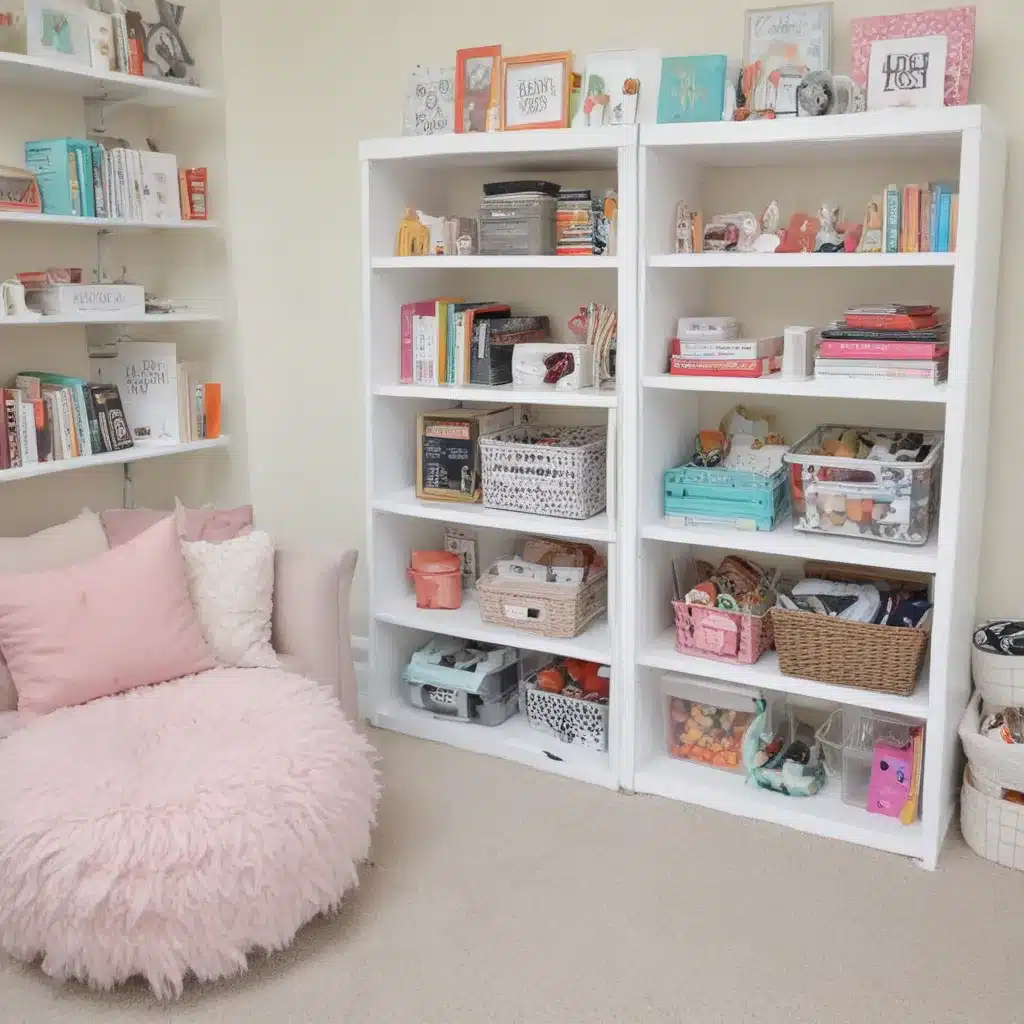
Start by investing in some good-quality storage solutions. Shelves, bins, and baskets are your new best friends. Designate specific areas for different types of items – toys in one zone, art supplies in another, and so on. Label everything, because let’s be honest, the chances of your little ones remembering where the crayons go are about as slim as finding a unicorn in your backyard.
But organization isn’t just about the physical space – it’s also about creating a sense of routine and predictability. Encourage your kids to tidy up their toys at the end of the day, or set aside a specific time for them to put away their belongings before moving on to the next activity. The more you can turn this into a habit, the better.
Hacks and Strategies: Outsmarting the Chaos
Now, I know what you’re thinking: “Okay, this all sounds great in theory, but how the heck do I actually make it happen?” Fear not, my friends, for I have a few tricks up my sleeve.
First and foremost, get the whole family involved. Kids love to feel like they’re part of the team, so make a game out of it. Turn cleaning up into a friendly competition, or challenge them to see who can put their toys away the fastest. And don’t forget the power of positive reinforcement – a sticker chart or a special treat can go a long way in motivating those little helpers.
Another handy tip? Invest in some multipurpose storage solutions. Ottomans with hidden compartments, under-the-bed bins, and even vertical shelving units can help you maximize every inch of available space. And don’t be afraid to get creative – repurpose old boxes, baskets, or even suitcases to stash away those stray socks and hairbows.
But perhaps one of the most important strategies in the battle against kid chaos? Learn to let go of perfection. I know, I know, it’s easier said than done, but trust me, it’s a game-changer. Instead of stressing about achieving Pinterest-worthy levels of tidiness, focus on maintaining a functional and comfortable space. After all, a little bit of clutter is just a sign that your little ones are living their best lives.
The Rewards: A Calmer, Happier Home
As you embark on this organizational journey, it’s important to keep your eye on the prize. Because the truth is, the benefits of a well-organized kid space go far beyond just the aesthetics. Think about it – when your child’s room (or playroom, or whatever designated area they call their own) is neat, tidy, and easy to navigate, it can have a profound impact on their overall well-being.
Imagine a scenario where your little one can easily find their favorite toy without having to rummage through piles of clutter. Or a morning where they can get dressed without tripping over a mountain of discarded clothes. These small victories can actually help to reduce stress, foster a sense of independence, and even improve their overall mood and focus.
And let’s not forget about the benefits for us parents, too. When the kid spaces in our homes are organized and under control, it can free up our mental bandwidth to focus on the truly important things – quality time with our little ones, pursuing our own passions, or simply taking a much-needed breather.
So, my fellow parents, let’s raise a glass (or a sippy cup) to the power of organized kid spaces. It may not be the most glamorous task on our never-ending to-do lists, but trust me, the rewards are well worth the effort. After all, a calmer, happier home is the ultimate prize, and it’s one that we all deserve to claim.
Conclusion: Embrace the Journey, Conquer the Chaos
As we bring this journey to a close, I want to leave you with one final thought: organizing kid spaces is not a one-and-done endeavor. It’s an ongoing process, a delicate dance between maintaining order and embracing the inevitable chaos that comes with raising little ones.
But here’s the thing – that’s okay. In fact, it’s all part of the adventure. Because let’s be real, if our homes were perfectly pristine 24/7, it would probably feel a bit like living in a museum, wouldn’t it? No, the true magic happens in the in-between moments, the times when we can laugh at the crayon-covered walls and revel in the joy of a spontaneous pillow fight.
So, my friends, take a deep breath, roll up your sleeves, and dive headfirst into the wonderful world of organized kid spaces. It may not be easy, but trust me, the sense of accomplishment (and the reclaimed living room floor) will be more than worth it. And who knows, you might even discover a hidden talent for creative storage solutions along the way.
After all, the journey is the destination, and the chaos? Well, that’s just part of the fun.