Why Make Your Own Cleaning Wipes?
Making your own cleaning wipes at home has several benefits:
-
Cost Savings – Store-bought cleaning wipes can be expensive. Making your own allows you to control the cost.
-
Customization – You can tweak the recipe to make wipes suited for different purposes, like bathroom wipes, glass wipes, etc.
-
Less Waste – Reusable cloth wipes reduce waste compared to disposable wipes. Even disposable homemade wipes use less packaging.
-
Natural Ingredients – You control what goes into homemade wipes, so you can avoid harsh chemicals.
Supplies Needed
Making homemade cleaning wipes is easy with just a few supplies:
-
Liquid castile soap – Look for unscented soap to avoid overpowering scents. Dr. Bronner’s and Mrs. Meyer’s make good options.
-
Essential oils (optional) – Add your own scents with oils like lemon, peppermint or tea tree.
-
Distilled white vinegar – Helps cut grease and disinfect.
-
Water
-
Washable cloth wipes or paper towels – Cloth reusable wipes are eco-friendly. Paper towels are disposable.
-
Airtight container(s) – Glass jars or plastic containers work to store the wipes.
-
Labeling supplies – To identify each type of wipe.
Making the Solution
The basic wipe solution includes just soap, water, and vinegar. Adjust the amounts as needed:
- 2 cups water
- 1⁄4 cup liquid castile soap
- 1⁄4 cup distilled white vinegar
For scented wipes, add 15-30 drops essential oils to the solution.
Suggested oil blend ideas:
- Bathroom – tea tree, lemon, peppermint
- Glass & Surface – lemon, lime, grapefruit
- All-Purpose – lavender, orange, lemon
Soaking the Wipes
The process differs slightly depending on cloth reusable wipes vs. paper towel wipes.
For Reusable Cloth Wipes
Cut cloth into desired sizes. Old t-shirts, flannel, and microfiber cloths all work well.
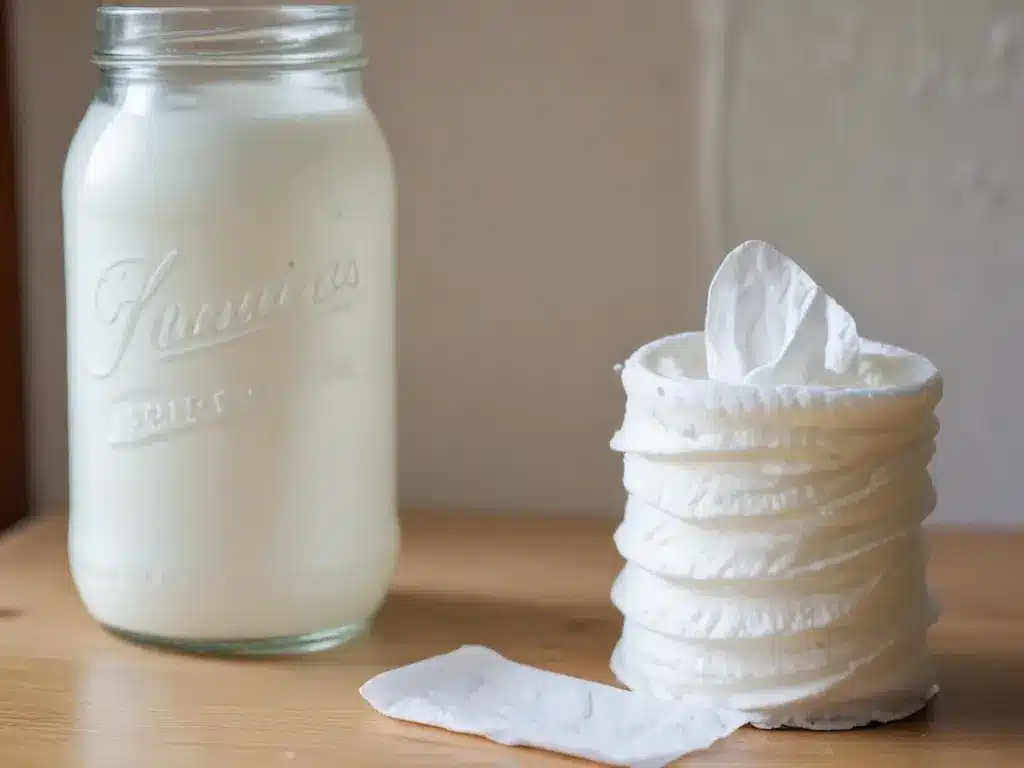
Add the solution to a jar or plastic container. Drop in cloth wipes to soak up solution.
Once saturated, tightly screw lid on jar and store. The wipes stay moistened so they are ready to use!
For Paper Towel Wipes
Pour the solution over a stack of paper towels. Let soak in the solution briefly.
Lift out the soaked stack and transfer to an airtight container. Make sure lid seals tightly.
Shake container occasionally to distribute wetness evenly.
Making Wipes for Each Room
Create custom wipes for different rooms:
Bathroom Wipes
Good for cleaning sinks, counters, mirrors, and toilets.
Add tea tree oil and peppermint oil to disinfect.
Glass and Surface Wipes
Great for windows, mirrors, countertops, and tables.
Use lemon or citrus oils to help cut grease and leave a streak-free shine.
Kitchen Wipes
Helpful for cleaning up food messes on counters, appliances, and floors.
Include lavender oil or orange oil for a fresh scent.
All-Purpose Wipes
Generic wipes that can be used in any room.
A blend of lemon, lavender, and orange oils provides a lightly scented multi-use wipe.
Storing and Using Your Wipes
-
Store wipes in a cool, dry place out of direct sunlight.
-
For cloth wipes, keep the lid tightly sealed to prevent drying out.
-
For paper wipes, re-wet occasionally with solution if they start to dry.
-
When using, grab a wipe and wipe down surfaces. Reuse cloth wipes; dispose of paper wipes.
-
Make fresh batches of solution every 2-3 weeks to prevent bacterial growth.
Making your own wipes is easy, customizable, and budget-friendly. Soon you’ll have specialized wipes to keep every room clean!