
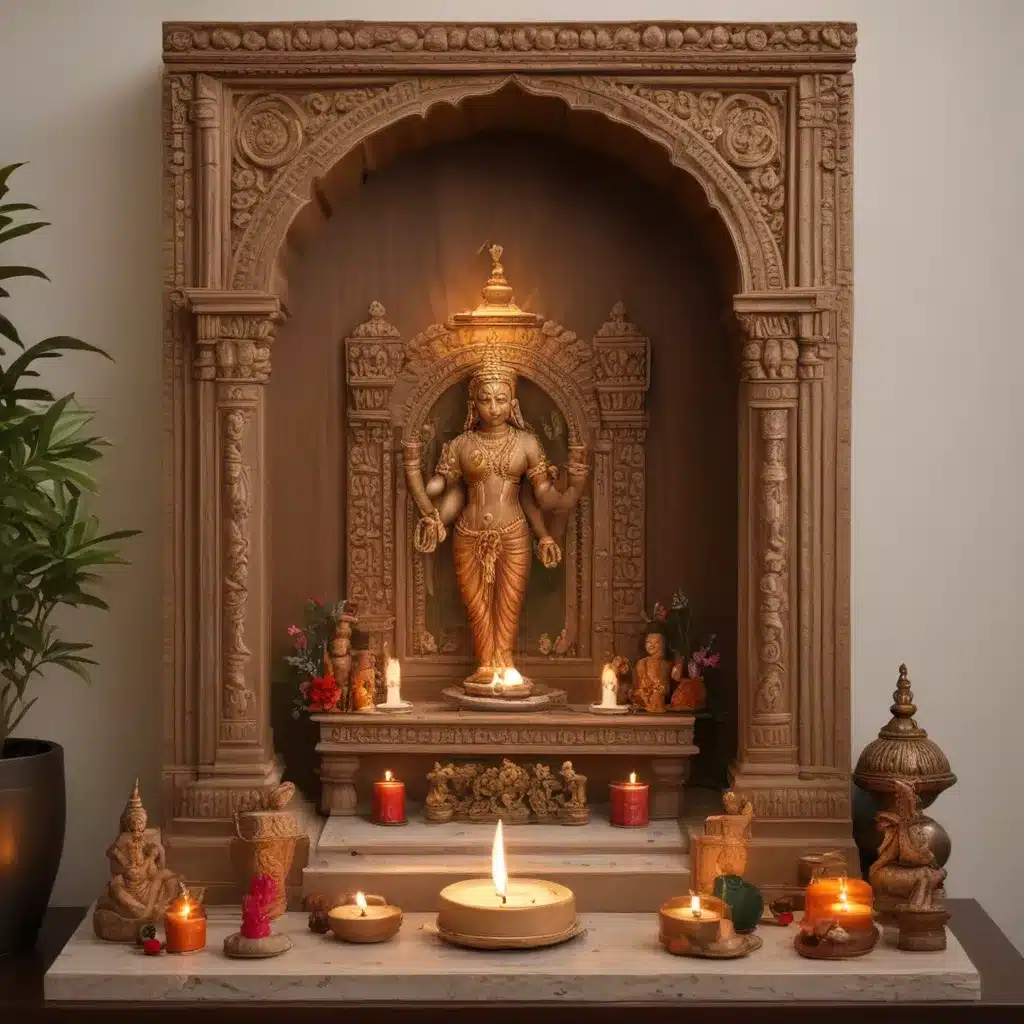
The Power of Sacred Spaces
I remember the first time I stepped into my grandparents’ home in Nottingham. The air was thick with the scent of incense, and a sense of tranquility enveloped the space. In the corner of the living room, nestled amidst intricate tapestries and figurines, stood a small but beautifully curated home temple. This sacred space, dedicated to the deities they held dear, quickly became a source of wonder and inspiration for me.
As I grew older and began exploring my own spiritual path, I realized the profound impact that creating a home temple can have. It’s not just about setting up an altar with a few religious items – it’s about cultivating a space that reflects your beliefs, values, and connection to the divine. And when you align this space with the principles of Hinduism, the transformative power of your home temple can be truly remarkable.
Choosing the Right Spot
The first step in creating a home temple is to carefully select the location. According to Hindu tradition, the ideal spot is one that is quiet, clean, and free from distractions. It should be a place where you can easily focus your mind and connect with the divine.
For example, my friend Asha, who lives in Nottingham, chose a cozy nook in her bedroom to set up her home temple. “I wanted a space that was private and serene,” she explains. “Somewhere I could retreat to for my daily rituals and meditations.” By placing her temple in a quiet corner, Asha has created a sanctuary within her own home – a sacred refuge where she can nurture her spiritual practice.
Designing the Altar
Once you’ve chosen the perfect spot, it’s time to start designing your home temple’s altar. This is where the magic really happens! The altar is the centerpiece of your sacred space, and it should be arranged with intention and care.
Start by selecting a sturdy, elevated surface to serve as the foundation. This could be a small table, a shelf, or even a simple wooden crate. Then, choose deities, symbols, or images that resonate with your personal beliefs and spiritual path. Many Hindus include murtis (sacred images or statues) of their chosen gods and goddesses, such as Ganesh, Shiva, or Lakshmi.
Remember, the altar is not just a display – it’s a space to honor the divine and invite their presence into your home. Adorn it with offerings, such as flowers, incense, or fresh fruit. You might also choose to include sacred texts, like the Bhagavad Gita or the Vedas, to further enrich your practice.
As you arrange your altar, pay close attention to the placement of each item. The most auspicious arrangement often places the main deity in the center, with smaller deities or symbols surrounding them. This creates a sense of balance and harmony, reflecting the interconnected nature of the divine.
Establishing a Ritual Practice
With your home temple set up, the next step is to establish a regular ritual practice. This could involve a morning puja (devotional ceremony), an evening aarti (light offering), or a weekly session of chanting and meditation.
The key is to find a routine that feels meaningful and sustainable for you. Perhaps you start your day by lighting a candle, offering a flower, and reciting a few verses from a sacred text. Or maybe you prefer to end your evenings with a peaceful session of mantra recitation.
Remember, there is no one-size-fits-all approach when it comes to Hindu home temple practices. The beauty of this tradition lies in its flexibility and personalization. Experiment with different rituals and find what resonates most with you.
As you deepen your practice, you may also want to consider incorporating other elements, such as the burning of incense, the ringing of a bell, or the playing of devotional music. These sensory cues can help transport you into a more meditative state and heighten your connection to the divine.
Honoring the Cycles of Life
One of the most remarkable aspects of Hindu home temples is their ability to honor the cycles of life. From major life events to the changing of the seasons, these sacred spaces provide a framework for marking the significant moments that shape our existence.
For example, many Hindus will light a special diya (oil lamp) during auspicious festivals, such as Diwali or Pongal. These rituals not only connect us to our cultural heritage but also serve as reminders of the eternal cycle of light and dark, birth and death.
Similarly, the placement of your home temple can be influenced by the principles of Vastu Shastra, an ancient Hindu system of architecture and design. By aligning your temple’s direction and orientation with the cardinal directions, you can harness the natural energies of the cosmos and create a harmonious living environment.
Finding Inspiration and Community
As you embark on your journey of creating a home temple, remember that you are not alone. The rich tapestry of Hindu spiritual traditions is woven with countless stories, practices, and sources of inspiration.
Seek out books, articles, or online resources that delve deeper into the significance and symbolism of home temples. Engage with local Hindu communities in Nottingham, where you may find mentors, workshops, or even temple visits that can deepen your understanding and practice.
And don’t be afraid to let your creativity shine through! Your home temple should be a reflection of your unique spiritual path and personal expression. Experiment with different decorative elements, incorporate personal mementos, or even create your own rituals that speak to your heart.
Remember, the ultimate goal of a home temple is not just to create a beautiful space, but to cultivate a deep, meaningful connection with the divine. By aligning your sacred space with the principles of Hinduism, you can transform your home into a sanctuary of peace, wisdom, and spiritual nourishment.
So, my friends, let us embark on this journey together. May your home temple become a beacon of light, guiding you ever closer to the infinite source of all that is.