Embracing Harmony: The Art of Minimalist Living
As someone who has always been captivated by the elegance and simplicity of Eastern design philosophies, I’ve often found myself wondering how I could incorporate these principles into my own home. After all, in a world that’s increasingly cluttered and chaotic, the idea of creating a serene, harmonious living space has never been more appealing.
One of the core tenets of Eastern design is the concept of minimalism. The way I see it, minimalism isn’t about depriving yourself of the things you love – it’s about being intentional with the items you choose to surround yourself with. It’s about stripping away the unnecessary and focusing on the essential. And you know what? I’ve found that this approach can be incredibly liberating.
Think about it – when you declutter your living space, you free up mental bandwidth to focus on the things that truly matter. No more feeling overwhelmed by piles of stuff or constantly searching for that one elusive item you swear you had just yesterday. Instead, you can bask in the serenity of a clean, uncluttered environment and channel that energy into the activities and relationships that enrich your life.
Of course, embracing minimalism isn’t always easy. It can be a challenge to let go of the emotional attachments we have to our possessions, or to resist the temptation of the latest trend or must-have gadget. But I’ve found that the rewards far outweigh the effort. By consciously curating my living space, I’ve not only created a haven of tranquility, but I’ve also gained a greater sense of control and clarity in my life.
Cultivating Mindfulness: The Power of Thoughtful Cleaning
One of the things I love most about the Eastern approach to living is the emphasis on mindfulness – the practice of being fully present and engaged in the moment. And you know what? I’ve found that this principle can be applied to something as mundane as cleaning.
Think about it – when was the last time you really paid attention to the act of cleaning your home? If you’re like most people, it’s probably something you do on autopilot, with your mind wandering to the million other things you need to get done. But what if you approached it with a different mindset?
Imagine slowly and deliberately wiping down a surface, taking the time to notice the texture of the cloth, the gentle scent of the cleaning solution, the rhythmic movements of your hands. Or picture yourself meticulously folding a load of laundry, each crease and tuck a testament to your attention to detail. These may seem like small, insignificant tasks, but by infusing them with mindfulness, you can transform the mundane into the meaningful.
Not only does this mindful approach to cleaning have the potential to make the process more enjoyable and fulfilling, but it can also have profound effects on your overall well-being. When you’re fully present in the moment, you’re less likely to be consumed by worries about the past or anxieties about the future. Instead, you’re able to find a sense of calm and focus that can ripple out into other areas of your life.
Honoring Nature: Bringing the Outdoors In
Another key principle of Eastern design is the deep respect and reverence for the natural world. In many Eastern cultures, the line between the indoor and outdoor environments is often blurred, with homes being designed to seamlessly integrate with the surrounding landscape.
This connection to nature is something that I’ve always found incredibly soothing and restorative. There’s something about the sight of a lush, verdant plant or the sound of a babbling brook that has a way of instantly calming the mind and nourishing the soul.
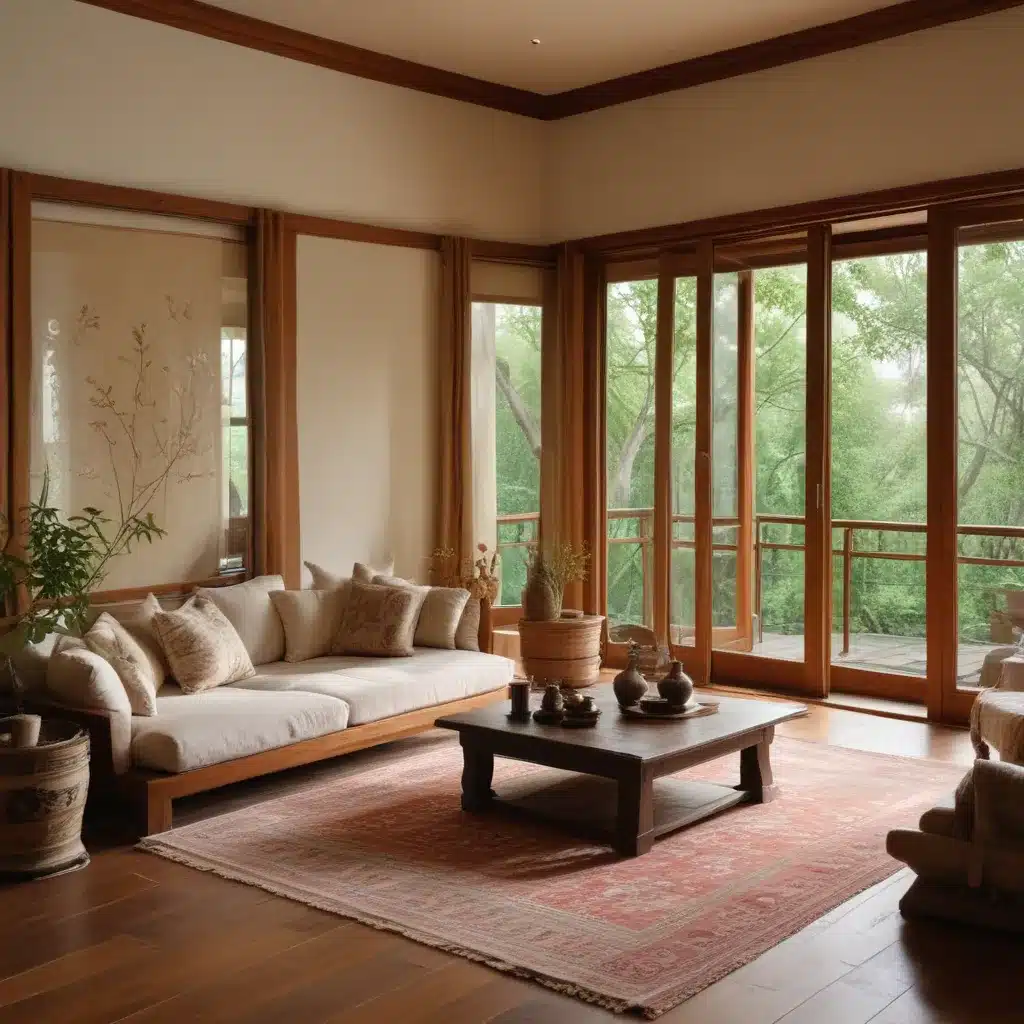
That’s why, in my own home, I’ve made a concerted effort to bring elements of the natural world inside. Whether it’s through the placement of strategically placed houseplants, the use of natural materials like wood and stone, or the incorporation of biophilic design features like living walls or water features, I’ve found that these touches of nature have a way of imbuing my living space with a sense of tranquility and balance.
And you know what? The benefits of this approach go beyond just the aesthetic. Studies have shown that exposure to nature can have profound positive effects on our physical and mental health, from reducing stress and anxiety to boosting mood and cognitive function. So, by embracing the principles of Eastern design and bringing the outdoors in, we can create a living environment that not only looks beautiful, but also nourishes our well-being on a deeper level.
Balancing the Elements: Harnessing the Power of Feng Shui
Of course, no discussion of Eastern design principles would be complete without mentioning the ancient art of Feng Shui. For those unfamiliar, Feng Shui is a practice that explores the relationship between the built environment and the natural world, with the goal of creating a harmonious, balanced living space.
The basic premise of Feng Shui is that our homes and workplaces are imbued with a subtle, unseen energy known as “chi.” By arranging the elements of our living spaces in a way that promotes the smooth flow of this energy, we can create an environment that supports our overall well-being and helps us to thrive.
Now, I know what you might be thinking – “Feng Shui sounds a bit woo-woo, doesn’t it?” And I totally get that. After all, the idea of invisible energy forces and the importance of the positioning of furniture and decor can seem a bit far-fetched. But hear me out – even if you’re a total skeptic, the underlying principles of Feng Shui can still have a powerful impact on the way we experience our homes.
Take the concept of the “bagua,” for example. This is a tool used in Feng Shui to map out the different areas of a living space and their corresponding life aspects, such as wealth, health, and relationships. By being mindful of how these areas are organized and balanced, we can create a living environment that supports our goals and aspirations.
Or consider the idea of “elemental harmony.” In Feng Shui, each element – wood, fire, earth, metal, and water – is believed to have its own unique properties and energetic qualities. By incorporating these elements in a thoughtful, intentional way, we can cultivate a sense of balance and harmony that can have a profound impact on our mood, productivity, and overall well-being.
Nourishing the Senses: The Aesthetics of Eastern Design
Of course, no discussion of Eastern design principles would be complete without touching on the aesthetic aspect of this approach. After all, one of the things that often draws people to Eastern-inspired decor is the sheer beauty and elegance of it all.
Think about the clean, minimalist lines of a traditional Japanese tea house, or the ornate, intricate patterns of a Chinese silk tapestry. There’s a level of intentionality and attention to detail that is simply captivating. And you know what? I believe that by incorporating these aesthetic elements into our own living spaces, we can create a true oasis of tranquility and beauty.
One of the key elements of Eastern design is the use of natural materials and textures. Whether it’s the warm, earthy tones of bamboo, the smooth, polished surfaces of river stones, or the delicate, gossamer-like quality of silk, these materials have a way of evoking a sense of calm and grounding that can be incredibly soothing.
But it’s not just about the materials themselves – it’s also about how they’re used. In Eastern design, there’s a strong emphasis on negative space, allowing for moments of rest and contemplation amidst the visual elements. This creates a sense of balance and harmony that can be truly mesmerizing.
And let’s not forget the importance of light and shadow. In many Eastern design traditions, the interplay of light and dark is considered to be a powerful creative force, one that can be used to evoke specific moods and emotional responses. By strategically placing lighting elements and playing with the way light filters through a space, we can create a living environment that feels warm, welcoming, and deeply nourishing to the senses.
Embracing the Imperfect: The Beauty of Wabi-Sabi
One of the things that I find most intriguing about Eastern design principles is the concept of “wabi-sabi.” This Japanese aesthetic philosophy celebrates the beauty of imperfection, embracing the natural flaws and irregularities that are inherent in all things.
In a world that’s increasingly obsessed with flawlessness and perfection, the idea of wabi-sabi can be a refreshing antidote. After all, isn’t there something deeply human and relatable about the concept of imperfection? The way a worn, weathered wooden table bears the marks of its history, or the delicate asymmetry of a handcrafted ceramic piece – these are the things that give an object a sense of character and authenticity.
When I think about applying the principles of wabi-sabi to my own home, I’m reminded of the importance of celebrating the unique and the unconventional. It’s about embracing the natural imperfections in the materials I choose, rather than trying to achieve some sort of flawless, pristine aesthetic. It’s about reveling in the patina of age and wear, and finding the beauty in the imperfect and the unfinished.
And you know what? I’ve found that this approach can be incredibly liberating. By letting go of the pressure to create a “perfect” living space, I’ve been able to focus on cultivating an environment that feels truly authentic and nourishing to my senses. It’s a space that reflects my own unique personality and experiences, rather than trying to conform to some arbitrary standard of design perfection.
Conclusion: Embracing the Essence of Eastern Design
As I reflect on my journey of incorporating Eastern design principles into my home, I can’t help but feel a deep sense of gratitude and appreciation for the wisdom and insight they’ve brought into my life. From the minimalist elegance of a decluttered space to the soothing, grounding effect of natural materials and elements, these principles have helped me to create a living environment that nourishes my mind, body, and spirit.
But it’s not just about the aesthetics – it’s about the deeper, more holistic approach to living that these principles represent. By embracing concepts like mindfulness, connection to nature, and the beauty of imperfection, I’ve found that my home has become a true sanctuary – a place where I can retreat from the chaos of the outside world and reconnect with what truly matters.
And you know what? I believe that these principles have the power to enrich all of our lives, regardless of our cultural background or design preferences. Because at the end of the day, what we’re all seeking is a sense of balance, harmony, and deep, abiding connection – and that’s exactly what Eastern design principles can help us to cultivate, both in our living spaces and in our lives.
So, if you’re feeling inspired to bring a touch of Eastern-inspired serenity into your home, I encourage you to start exploring these principles and see how they might resonate with you. Whether it’s through the incorporation of natural materials, the mindful practice of cleaning, or the celebration of imperfection, I can assure you that the journey will be one of profound discovery and personal growth.
After all, our homes are not just physical spaces – they’re extensions of our inner selves, reflections of our values, and sanctuaries where we can nurture our well-being. And by embracing the timeless wisdom of Eastern design, we can create living environments that truly nourish our souls and help us to thrive.