The Importance of Deep Cleaning Wood Floors
As a homeowner, I understand the significance of maintaining the beauty and longevity of my wood floors. These floors are not only a central design element in my living space, but they also serve as a foundation for my daily activities. However, over time, wood floors can accumulate layers of dirt, grime, and even stubborn stains, which can diminish their overall appearance and potentially compromise their structural integrity. That’s why I believe that deep cleaning wood floors is a crucial task that every homeowner should prioritize.
In this comprehensive guide, I will explore the essential steps and best practices for deep cleaning wood floors, ensuring that your floors not only look their best but also remain durable and well-protected for years to come. I will delve into the various methods and products available, as well as provide practical tips and strategies to help you achieve the perfect, long-lasting shine.
Understanding the Anatomy of Wood Floors
Before we dive into the deep cleaning process, it’s essential to have a solid understanding of the anatomy of wood floors. The surface of a wood floor is composed of individual wood planks, each with its own unique grain patterns and textures. These planks are typically made from various species of hardwood, such as oak, maple, or cherry, each with its own set of characteristics and care requirements.
Below the surface, wood floors have an underlying structure that includes the subfloor, which provides a stable foundation, and the finishes, such as sealants or varnishes, that protect the wood from wear and tear. The type of wood, the quality of the installation, and the specific finishes used can all impact the way a wood floor responds to cleaning and maintenance.
By understanding the composition and structure of wood floors, I can better tailor my deep cleaning approach to address the unique needs of my flooring, ensuring that I protect the integrity of the wood while restoring its natural beauty.
Preparing for Deep Cleaning
Before I begin the deep cleaning process, it’s crucial to properly prepare the area. This involves a thorough assessment of the current condition of the wood floors, as well as the identification of any problem areas that may require special attention.
I will start by sweeping or vacuuming the floors to remove any loose dirt, debris, or pet hair. This will help ensure that the deep cleaning products I use are not hindered by surface-level grime. Next, I will carefully inspect the floors for any signs of damage, such as scratches, dents, or discoloration. If I find any areas of concern, I will make a note of them and address them accordingly during the cleaning process.
Another important step in the preparation stage is to move any furniture or decor that may be obstructing access to the floors. This will allow me to thoroughly clean the entire surface, ensuring that no area is left untreated.
Choosing the Right Cleaning Products
With the preparation complete, I can now focus on selecting the appropriate cleaning products for my wood floors. The market is flooded with a variety of wood floor cleaners, each with its own unique formulations and intended uses. It’s essential that I carefully research and choose products that are specifically designed for deep cleaning wood floors, as using the wrong products can potentially damage the surface or leave a dull, residue-filled finish.
One of the key factors I will consider when selecting cleaning products is the type of wood flooring I have. Some woods, such as oak or maple, may require a different cleaning solution than others, such as pine or bamboo. I will also take into account the specific finishes on my floors, as certain products may be more compatible with certain types of sealants or varnishes.
In addition to traditional wood floor cleaners, I may also explore the use of natural, eco-friendly products, such as vinegar or castile soap-based solutions. These alternatives can be just as effective in deep cleaning while offering a more sustainable and non-toxic approach.
Ultimately, the key to successful deep cleaning is choosing the right products for the job, and I will carefully research and test various options to find the perfect fit for my wood floors.
The Deep Cleaning Process
With the preparation complete and the right cleaning products in hand, I can now begin the deep cleaning process. This process typically involves several steps, each designed to address a specific aspect of the wood floor’s condition.
Step 1: Spot Cleaning
The first step in the deep cleaning process is to address any problem areas or stubborn stains that may be present on the wood floors. I will use a focused cleaning solution and a soft-bristled scrub brush to gently work on these areas, taking care not to damage the surrounding wood.
Step 2: Whole-Floor Cleaning
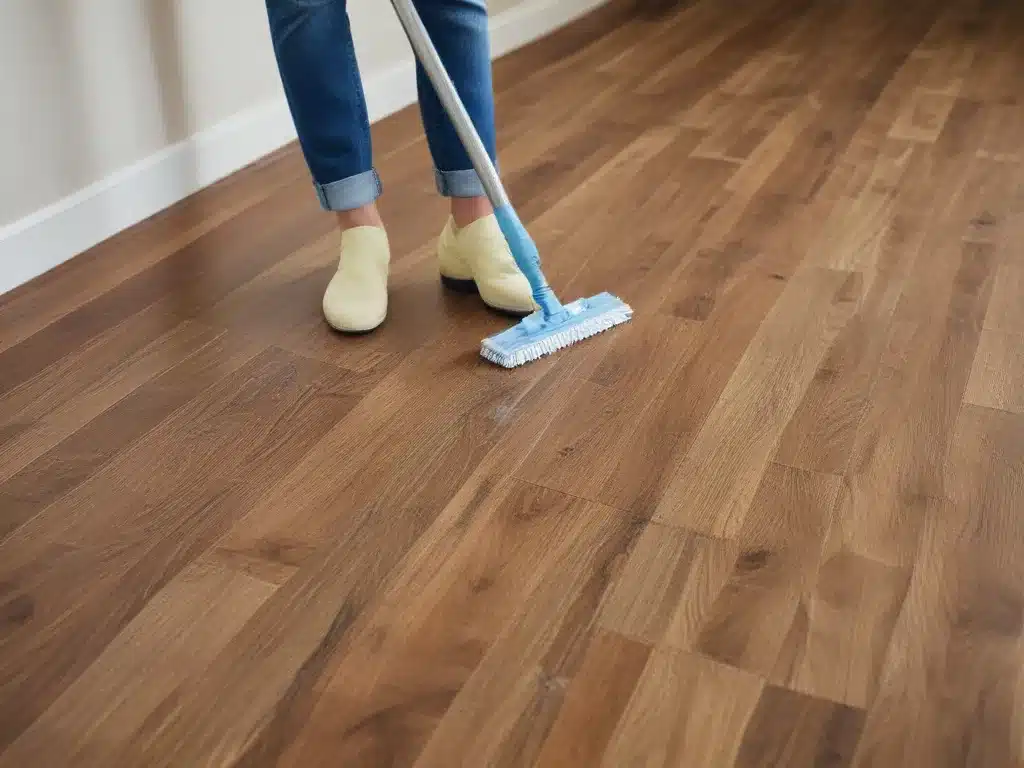
Once the spot cleaning is complete, I will move on to the whole-floor cleaning. I will apply the wood floor cleaning solution to the entire surface, using a mop or a specialized cleaning tool to distribute the product evenly. I will pay close attention to the manufacturer’s instructions, ensuring that I allow the appropriate dwell time for the solution to work its magic.
Step 3: Scrubbing
After the cleaning solution has had a chance to penetrate the wood, I will use a scrub brush or a rotary floor machine to agitate the surface. This will help to lift and remove the accumulated dirt, grime, and stains, revealing the true beauty of the wood underneath.
Step 4: Rinsing and Drying
With the deep cleaning complete, I will thoroughly rinse the floors with clean water, removing any residual cleaning solution. I will then use a clean, dry mop or towels to absorb any excess moisture, ensuring that the wood is left with a clean, dry surface.
Step 5: Refinishing (optional)
Depending on the condition of the wood floors, I may choose to apply a fresh coat of sealant or varnish to further protect and enhance the surface. This step is particularly important if the existing finish is worn or damaged, as it will help to prevent future wear and tear.
Throughout the deep cleaning process, I will be mindful of the specific care requirements of my wood floors, adjusting my techniques and products as needed to achieve the best possible results.
Maintaining the Shine
Once the deep cleaning is complete, it’s essential to establish a regular maintenance routine to keep the wood floors looking their best. This may involve periodic spot cleaning, damp mopping, and the application of wood floor polish or protectants.
I will be diligent in sweeping or vacuuming the floors on a regular basis, as this will help to prevent the buildup of dirt and debris that can lead to scratches and dull spots. Additionally, I will be cautious about the types of cleaning products I use, avoiding harsh chemicals or abrasives that could potentially damage the wood.
By staying proactive and consistent with my wood floor maintenance, I can ensure that the deep cleaning I’ve invested in will continue to pay dividends, keeping my floors looking fresh and vibrant for years to come.
Hiring a Professional
While deep cleaning wood floors can be a manageable task for many homeowners, there may be instances where it’s best to enlist the help of a professional wood floor cleaning service. This can be especially true for large or heavily soiled floors, or if I feel unsure about the best cleaning methods to use.
Professional wood floor cleaners have the expertise, specialized equipment, and high-quality products necessary to perform a thorough, effective deep clean. They can also identify and address any underlying issues, such as damage or improper installation, that may be contributing to the floor’s appearance.
Additionally, hiring a professional can save me time and effort, as they can typically complete the deep cleaning process much more efficiently than I could on my own. This can be particularly valuable for homeowners with busy schedules or limited physical abilities.
If I do choose to hire a professional wood floor cleaning service, I will be sure to research their credentials, read reviews, and obtain multiple quotes to ensure that I am getting the best value for my money. By working with a trusted and experienced provider, I can have confidence that my wood floors will be restored to their former glory.
Conclusion
In conclusion, deep cleaning wood floors is an essential task for any homeowner who values the beauty and longevity of their living spaces. By understanding the anatomy of wood floors, selecting the right cleaning products, and following a comprehensive deep cleaning process, I can restore the shine and luster to my floors, while also protecting their structural integrity.
Throughout this guide, I have emphasized the importance of preparation, attention to detail, and consistent maintenance to ensure that my wood floors remain in top condition. Whether I choose to tackle the deep cleaning myself or enlist the help of a professional, I now have the knowledge and resources necessary to make informed decisions that will keep my wood floors looking their best for years to come.
Remember, the key to a successful deep clean is to approach it with care, patience, and a commitment to achieving the perfect finish. By following the steps outlined in this guide, I can confidently take on the challenge of deep cleaning my wood floors and enjoy the satisfaction of a job well done.
If you’re interested in learning more about our wood floor cleaning services, please visit https://adamcleaning.uk/services/. Our team of experts would be happy to assist you in maintaining the beauty and longevity of your wood floors.