Introduction: Embracing the Power of Natural Cleaning
I’ve always been fascinated by the concept of natural cleaning. The idea of using simple, household ingredients to tackle everyday messes and maintain a clean, healthy living environment has always appealed to me. As the founder of AdamCleaning.uk, I’ve seen firsthand the impact that chemical-laden commercial cleaners can have on our homes and the environment. That’s why I’m excited to share my knowledge and experiences with you today on the topic of DIY natural cleaners.
In this comprehensive guide, I’ll take you on a journey through the world of natural cleaning, exploring the benefits, the essential ingredients, and the step-by-step process of creating your own effective, eco-friendly cleaners. Whether you’re looking to reduce your environmental footprint, save money, or simply create a healthier home, this article will provide you with the knowledge and tools you need to get started.
The Benefits of Natural Cleaning
What are the primary advantages of using natural cleaners over their commercial counterparts? The subject of this section will delve into the multifaceted benefits that natural cleaning offers.
The first and perhaps most significant benefit is the impact on our health. Conventional cleaning products often contain a cocktail of harsh chemicals, such as bleach, ammonia, and volatile organic compounds (VOCs), which can be harmful when inhaled or absorbed through the skin. These chemicals have been linked to a variety of health issues, ranging from respiratory problems to endocrine disruption. By opting for natural cleaners, we can eliminate these toxic substances from our homes and create a healthier living environment for ourselves and our loved ones.
Moreover, natural cleaners are generally much more environmentally friendly than their chemical-based counterparts. Many commercial cleaners contain ingredients that are difficult to break down, leading to water pollution and harm to aquatic ecosystems. In contrast, natural cleaners are typically made from plant-based or mineral-based ingredients that are biodegradable and pose minimal risk to the environment. This not only benefits the planet but also contributes to a more sustainable lifestyle.
Another compelling benefit of natural cleaning is the cost-effectiveness. The raw materials used in DIY natural cleaners, such as baking soda, vinegar, and essential oils, are often inexpensive and readily available. By making your own cleaners, you can save a significant amount of money compared to purchasing commercial products. This can be particularly advantageous for those on a tight budget or looking to reduce household expenses.
Finally, natural cleaners can be highly versatile and effective. Many of the ingredients used in DIY cleaners have inherent cleaning and disinfecting properties, allowing them to tackle a wide range of cleaning tasks. From degreasing kitchen surfaces to removing stubborn stains, natural cleaners can often outperform their chemical-laden counterparts in terms of efficiency and performance.
Essential Ingredients for Natural Cleaning
In this section, I’ll delve into the key ingredients that form the foundation of effective DIY natural cleaners. Understanding these essential components will empower you to create your own custom cleaning solutions tailored to your specific needs.
One of the most versatile and widely used natural cleaning ingredients is baking soda. This humble kitchen staple is a powerful abrasive that can effectively scrub away dirt, grease, and grime without leaving behind harsh chemicals. Baking soda is also a natural deodorizer, making it an excellent choice for tackling unpleasant odors in the home.
Another essential ingredient in natural cleaning is vinegar. Specifically, white distilled vinegar is a potent disinfectant and degreaser. When combined with water, vinegar can create a highly effective all-purpose cleaner suitable for a wide range of surfaces, from countertops to windows. Vinegar’s acidity also makes it an effective agent for removing hard water stains and mineral deposits.
Essential oils are another valuable addition to any natural cleaning toolkit. These concentrated plant-based extracts not only provide a pleasant fragrance but also possess antimicrobial and antiseptic properties. Commonly used essential oils in natural cleaning include lemon, tea tree, and lavender, each offering unique cleaning and disinfecting benefits.
Castile soap, a plant-based liquid soap made from olive oil, is another versatile ingredient in the world of natural cleaning. Castile soap can be used to create gentle, effective cleaners for surfaces, floors, and even laundry. Its biodegradable and non-toxic nature makes it a safe and environmentally friendly choice.
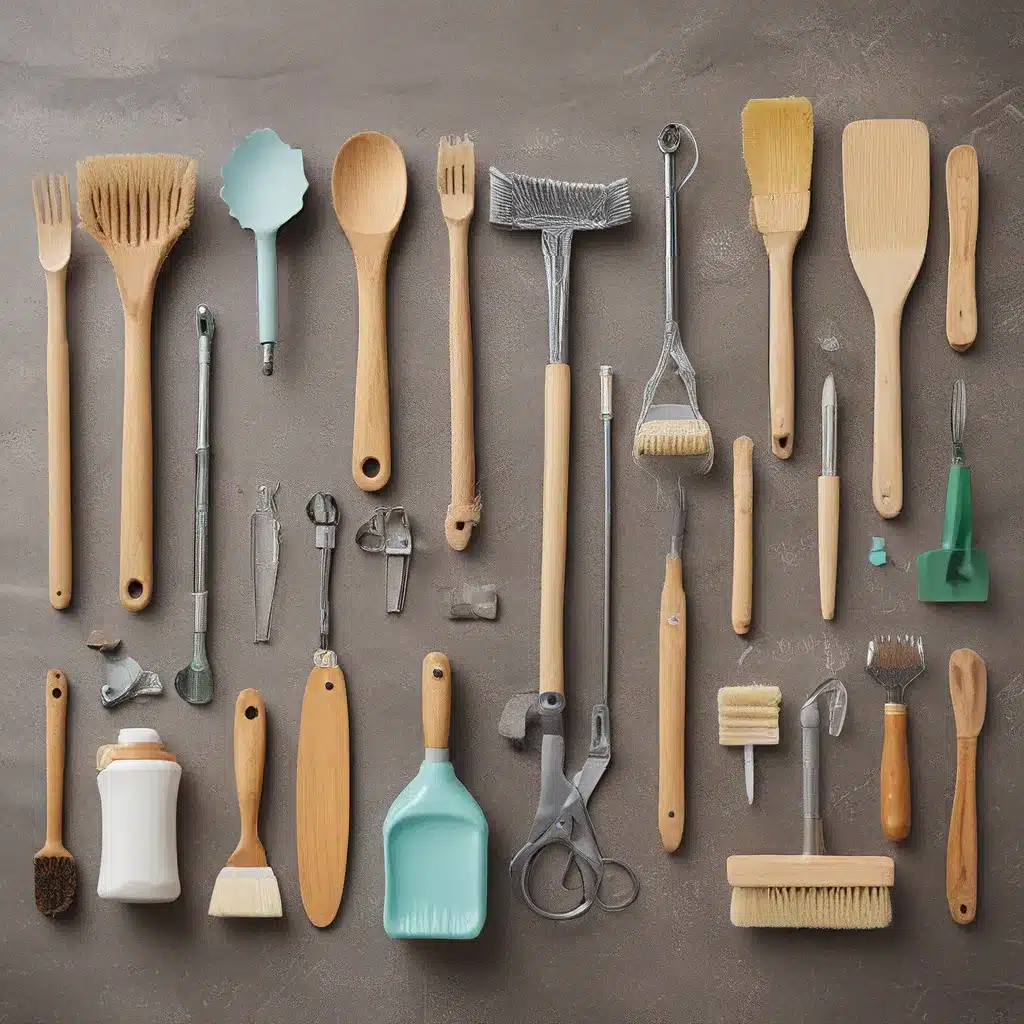
Finally, microfiber cloths and brushes play a crucial role in natural cleaning. These tools are designed to effectively lift and trap dirt, grease, and dust without the need for harsh chemicals. Microfiber’s unique fibers are highly absorbent and can help reduce the amount of water and cleaning solutions required, making the cleaning process more efficient and sustainable.
By understanding and mastering the use of these essential natural cleaning ingredients, you’ll be well on your way to creating a robust arsenal of DIY cleaning solutions that are both effective and eco-friendly.
Creating Your Own Natural Cleaners
Now that we’ve explored the benefits of natural cleaning and the key ingredients involved, let’s dive into the process of creating your own DIY natural cleaners. In this section, I’ll provide step-by-step guidance on how to formulate and customize your own cleaning products.
One of the fundamental natural cleaners to start with is an all-purpose cleaner. This versatile solution can be used to tackle a wide range of cleaning tasks, from countertops and floors to windows and mirrors. To create your own all-purpose cleaner, simply combine equal parts white vinegar and water in a spray bottle. You can then add a few drops of your preferred essential oil for a pleasant fragrance.
Another popular DIY natural cleaner is a multipurpose scrub. This abrasive cleaner is perfect for tackling stubborn stains and buildup on surfaces like sinks, bathtubs, and tile. To make your own scrub, mix baking soda with just enough water to form a spreadable paste. You can then add a few drops of castile soap and essential oils to enhance its cleaning power and aroma.
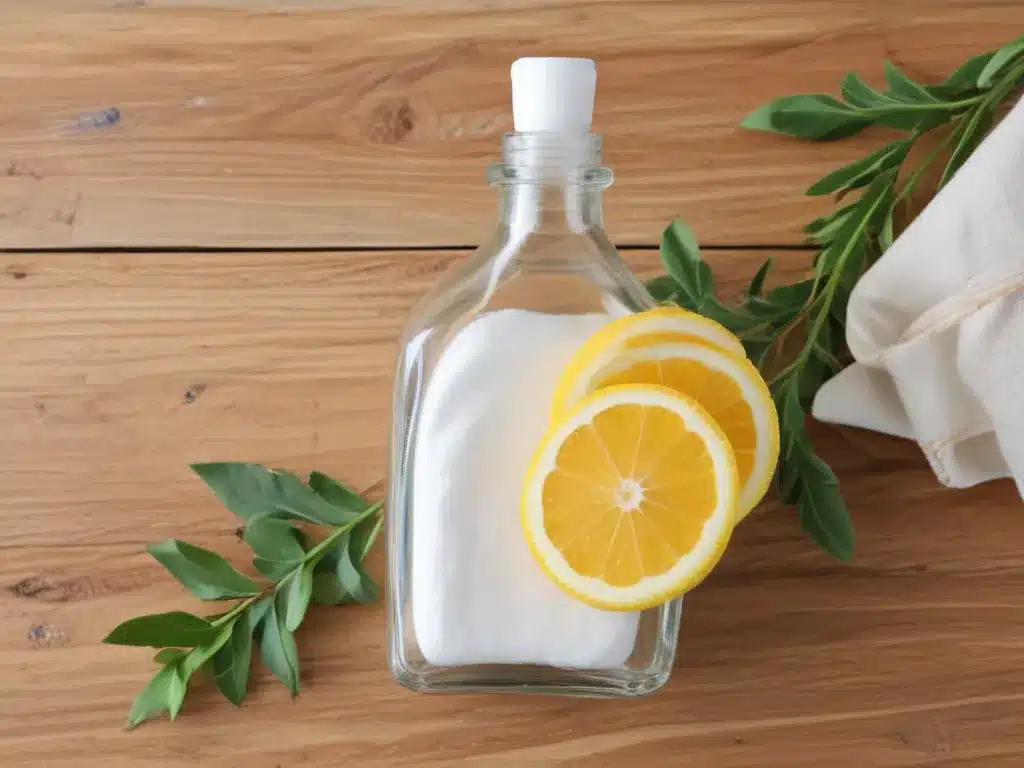
For those looking to tackle grease and grime, a degreasing solution made from citrus-based ingredients can be highly effective. Combine lemon juice or grated lemon zest with vinegar and a touch of castile soap in a spray bottle. This mixture will work wonders on kitchen surfaces, stovetops, and even oven interiors.
To maintain a fresh, clean-smelling home, you can create your own natural air freshener. Simply combine water, witch hazel (a natural astringent), and your choice of essential oils in a spray bottle. Mist this solution around the room to neutralize odors and infuse the air with a pleasant, natural fragrance.
One of the most versatile natural cleaners is a multi-purpose cleaning paste. To make this, mix baking soda, castile soap, and water to form a thick, spreadable paste. This paste can be used to scrub sinks, tubs, and tiles, as well as to pre-treat stains in laundry. Its abrasive yet gentle nature makes it a powerful yet safe cleaning solution.
Remember, the great thing about DIY natural cleaners is that you can customize them to suit your specific needs and preferences. Experiment with different ingredient ratios, essential oil blends, and cleaning tasks to find the perfect formulations for your home.
Putting Natural Cleaners to the Test
Now that we’ve covered the fundamentals of creating DIY natural cleaners, let’s explore some real-world examples and case studies to see these solutions in action.
One of my clients, Sarah, was looking to transition her household cleaning routine to a more eco-friendly and budget-friendly approach. She had been using commercial cleaning products for years, but was becoming increasingly concerned about the impact on her family’s health and the environment. When she reached out to AdamCleaning.uk, I recommended that she try creating her own natural cleaners.
Sarah started with a simple all-purpose cleaner, mixing vinegar and water in a spray bottle. To her surprise, she found that this solution was just as effective as the name-brand cleaners she had been using, if not more so. She was particularly impressed with its ability to cut through grease and grime on her kitchen countertops and stovetop.
Next, Sarah tackled her bathrooms with a homemade scrub made from baking soda, castile soap, and lemon essential oil. She was amazed at how quickly the scrub lifted away soap scum and hard water stains, leaving her sinks and tubs sparkling clean. She even used the scrub to revitalize the grout in her tile floors, achieving results that far exceeded her expectations.
Another one of my clients, Michael, was concerned about the air quality in his home. He had been using commercial air fresheners, but noticed that they would often trigger respiratory issues for his young daughter. I suggested that he try making his own natural air freshener using water, witch hazel, and a blend of essential oils.
Michael was delighted with the results. The homemade air freshener effectively neutralized unpleasant odors without relying on synthetic fragrances. His daughter’s respiratory symptoms improved, and the entire family enjoyed the soothing, natural aroma throughout their home.
These real-life examples demonstrate the power and versatility of DIY natural cleaners. By taking the time to create their own solutions, both Sarah and Michael were able to achieve remarkable cleaning results while prioritizing the health and well-being of their families and the environment.
Transitioning to a Natural Cleaning Routine
Making the switch to natural cleaning can seem daunting at first, but with the right mindset and a bit of planning, it can be a seamless and rewarding process. In this section, I’ll share some tips and strategies to help you transition your cleaning routine to a more eco-friendly and sustainable approach.
The first step is to take inventory of your current cleaning products. Go through your cabinets and closets and identify any commercial cleaners that contain harsh chemicals or synthetic ingredients. These products should be properly disposed of, as they can be harmful to the environment.
Next, start slowly by replacing one or two of your most frequently used cleaning products with homemade natural alternatives. This could be something as simple as swapping out your all-purpose cleaner or switching to a DIY natural floor cleaner. Taking it one step at a time will help make the transition feel more manageable and allow you to get comfortable with the new cleaning methods.
As you begin incorporating natural cleaners into your routine, be mindful of the results. Pay attention to how effectively they tackle your cleaning tasks, how they impact the overall cleanliness of your home, and how they affect the health and well-being of your family. Don’t be afraid to tweak your recipes or try new ingredients to find the perfect natural cleaning solutions for your needs.
It’s also important to involve the entire household in the transition to natural cleaning. Educate your family members about the benefits of using eco-friendly products and get them excited about the process. Encourage everyone to participate in the creation and use of the DIY cleaners, making it a shared experience that brings the family closer together.
Remember, the journey to a natural cleaning routine is not a race – it’s a gradual process that may take some time and experimentation. Be patient with yourself and trust that each small step you take will contribute to a healthier, more sustainable home environment.
Conclusion: Embracing the Natural Cleaning Revolution
As we reach the end of this comprehensive guide, I hope that I’ve been able to inspire you to embark on your own natural cleaning journey. The power of DIY natural cleaners lies in their ability to provide effective, eco-friendly solutions that not only benefit our homes but also our health and the environment.
By now, you should have a deep understanding of the advantages of natural cleaning, the essential ingredients to include in your homemade solutions, and the step-by-step process of creating your own custom cleaners. You’ve also seen real-life examples of how these natural cleaners can transform your living space, making it cleaner, fresher, and safer for you and your loved ones.
Remember, the transition to natural cleaning is a continuous process, and there’s always room for experimentation and further exploration. I encourage you to keep an open mind, explore new recipes, and find the natural cleaning solutions that work best for your unique needs and preferences.
If you’re looking for additional support or guidance as you navigate the world of natural cleaning, I invite you to visit AdamCleaning.uk/services/. Our team of experts is dedicated to helping individuals and families like yours achieve a cleaner, healthier, and more sustainable home environment. Together, let’s embark on this exciting journey and embrace the power of natural cleaning.