The Importance of Safety in Cleaning
As a professional cleaner, I understand the importance of prioritizing safety in our line of work. The cleaning industry can be fraught with potential hazards, from slippery floors to the use of hazardous chemicals. My goal is to ensure that you, the reader, are well-informed about the common cleaning accidents and injuries, and how to effectively prevent them. By the end of this article, you will have a comprehensive understanding of the steps you can take to create a safe and secure cleaning environment, both for yourself and your clients.
Cleaning accidents and injuries can have serious consequences, ranging from minor cuts and bruises to severe medical emergencies. These incidents can not only cause physical harm but also lead to lost productivity, increased insurance costs, and potential legal liabilities. As such, it is crucial that we approach cleaning with a safety-first mindset, and I am dedicated to providing you with the knowledge and strategies to do so.
In this in-depth article, I will delve into the common types of cleaning accidents and injuries, as well as the steps you can take to mitigate these risks. We will explore topics such as proper equipment usage, safe chemical handling, and effective training protocols. Additionally, I will share real-life case studies and expert insights to further reinforce the importance of prioritizing safety in the cleaning industry.
Understanding Common Cleaning Accidents and Injuries
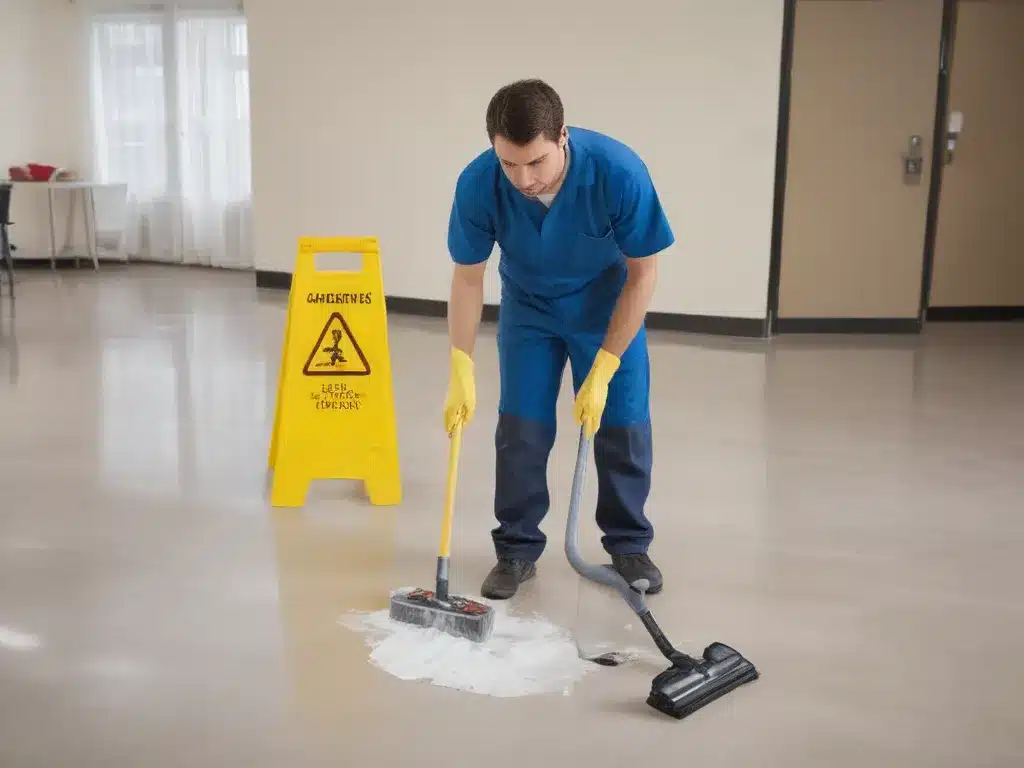
Cleaning professionals face a wide range of potential hazards on the job, each of which requires a tailored approach to prevention and mitigation. One of the most prevalent issues is the risk of slips, trips, and falls. Wet or slippery floors, uneven surfaces, and cluttered work areas can all contribute to these types of accidents. These incidents can lead to sprains, fractures, and even traumatic brain injuries, depending on the severity of the fall.
Another common issue is the exposure to hazardous chemicals. Many cleaning products contain substances that can be harmful if not handled properly. Skin irritation, respiratory problems, and chemical burns are all potential consequences of improper chemical handling. Additionally, the improper storage or disposal of these chemicals can pose environmental risks and lead to further complications.
Musculoskeletal injuries, such as back strains and repetitive strain injuries, are also a significant concern for cleaning professionals. The physical demands of the job, which often involve heavy lifting, reaching, and bending, can take a toll on the body over time. These types of injuries can lead to chronic pain, decreased mobility, and even the need for long-term medical treatment.
Implementing Effective Safety Measures
Addressing the risks associated with cleaning accidents and injuries requires a multifaceted approach, involving a combination of training, equipment, and organizational policies. As a professional cleaner, I believe that the first step in this process is to ensure that all cleaning personnel receive comprehensive safety training.
This training should cover a wide range of topics, from the proper use of personal protective equipment (PPE) to the safe handling of hazardous chemicals. Employees should also be educated on the recognition and prevention of common cleaning-related injuries, such as slips, trips, and falls, as well as strategies for maintaining good ergonomic practices.
In addition to training, the use of appropriate cleaning equipment and supplies is crucial for maintaining a safe work environment. This includes the use of non-slip mats, properly maintained cleaning tools, and well-ventilated work areas. Cleaning professionals should also be equipped with the necessary PPE, such as gloves, goggles, and respiratory protection, to mitigate the risks associated with chemical exposure.
Organizational policies and procedures also play a vital role in promoting safety in the cleaning industry. Employers should have clear and well-communicated protocols in place for the storage, usage, and disposal of cleaning chemicals. They should also encourage open communication and reporting of any safety concerns or incidents, enabling the swift identification and resolution of potential hazards.
Real-Life Case Studies and Expert Insights
To further illustrate the importance of safety in the cleaning industry, let’s explore some real-life case studies and the lessons we can learn from them. One such case involves a cleaning professional who sustained a severe back injury while attempting to lift a heavy piece of furniture. The investigation revealed that the employee had not received proper training on safe lifting techniques and that the organization lacked a comprehensive ergonomics program.
As a result of this incident, the company implemented mandatory training sessions on proper lifting and handling methods, as well as the provision of mechanical aids, such as dollies and hand trucks, to assist with heavy loads. The organization also conducted regular worksite assessments to identify and address potential ergonomic risks, ultimately reducing the incidence of musculoskeletal injuries among its cleaning staff.
Another case study involves a cleaning team that encountered a chemical spill while working on a client’s premises. Due to the lack of proper safety protocols and inadequate personal protective equipment, several team members suffered from skin irritation and respiratory distress. This incident highlighted the critical importance of comprehensive training in chemical handling and the need for well-stocked emergency response kits on-site.
In the aftermath of this event, the company implemented rigorous chemical safety training, which covered topics such as hazard communication, proper storage and labeling, and emergency response procedures. They also ensured that all cleaning personnel were equipped with the necessary PPE and that emergency response kits were readily available at each job site.
These case studies illustrate the real-world consequences of overlooking safety in the cleaning industry and the importance of proactive measures to prevent such incidents. By learning from the experiences of others, cleaning professionals and organizations can better prepare themselves to create a safer work environment and mitigate the risks associated with cleaning accidents and injuries.
Conclusion: Prioritizing Safety for a Successful Cleaning Business
In conclusion, the importance of safety in the cleaning industry cannot be overstated. By prioritizing the well-being of our employees and clients, we not only protect against the immediate consequences of accidents and injuries but also safeguard the long-term success and sustainability of our cleaning businesses.
As a professional cleaner, I am committed to leading by example and promoting a culture of safety within the industry. This means championing comprehensive training programs, investing in the right equipment and supplies, and establishing robust organizational policies that prioritize the health and safety of all involved.
Remember, a safe cleaning operation is a successful cleaning operation. By taking the necessary steps to mitigate the risks associated with cleaning accidents and injuries, you can not only protect your team but also build a reputation for excellence and reliability that will set your business apart.
I encourage you to visit AdamCleaning.uk/services/ to learn more about our comprehensive cleaning services and how we prioritize safety in all aspects of our operations. Together, we can create a safer, more secure cleaning industry for everyone.